In the last week, the team have been busy installing the French drains around the perimeter of the basement basically, 600mm deep. As mentioned in previous posts, we’ve learnt a lot from the heavy rain and the interaction with the high water table. From that experience over the last few months, we have been able to build a better understanding of water management in the landscape as well as around the property.
We’ve also included for a floated sump pump and 4” drainage to the road gulley which is maintained by highways. This gives us additional redundancy which we can use to offload any excess runoff water into the mains. We’re fortunate to live on chalk anyway so excess water is always likely to disperse quickly. We’ve also got a water meadow which from recent rain and dewatering dries up pretty fast.
Our structural engineer spent some time looking at sewage treatment plant. We’re currently proposing to go with the Bio-Bubble Compact Sewage Treatment Plant which achieves a very high quality of effluent discharge with a reliability that is unmatched by any other system. This is also in consideration of the landscape downstream given we want to turn it into a wildflower meadow.
In fact, if we get consent approval, the discharge from a Bio-Bubble domestic plant can flow direct to ponds, rivers, streams, bog gardens, ditches, etc, and is often used for irrigation or a recycling resource.
Noting this and the very high water we’re going to have to live with, we have been thinking that it is probably worth adding an overflow to the drainage field, to ensure during high water, the water doesn’t collect near the house. This would be relatively cheap to do as it would simply be a shallow trench with perforated pipes in it. We could direct this toward the rear of the meadow where the ground starts to slope away slightly. All of this is currently being considered with the landscape architect.
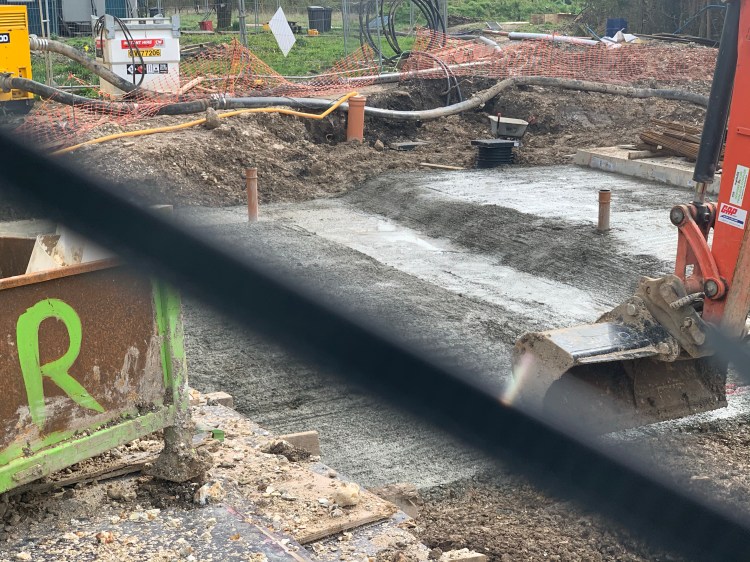
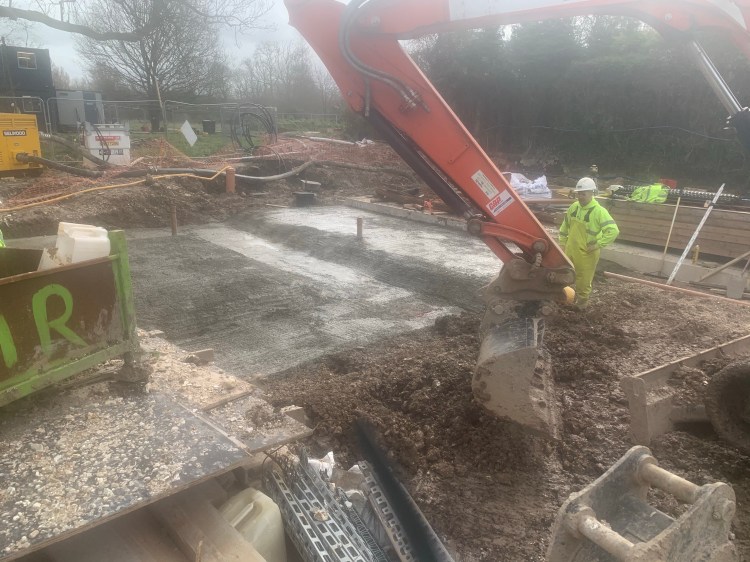
When I was on site yesterday, I took some photos in the basement, the groundwork team have also installed the French drains around the perimeter of the property and also started to prepare to cast the slab for the pavilion. Here are some of the photos from yesterday.
The formwork for the pavilion slab will start to take shape from today with a view to pouring the slab early next week. The steel that will support the pavilion structure and the first floor will also start to go up over the next week before the arrival of the SIP panels. That effectively will conclude the substructure work and mark the commencement of the superstructure.
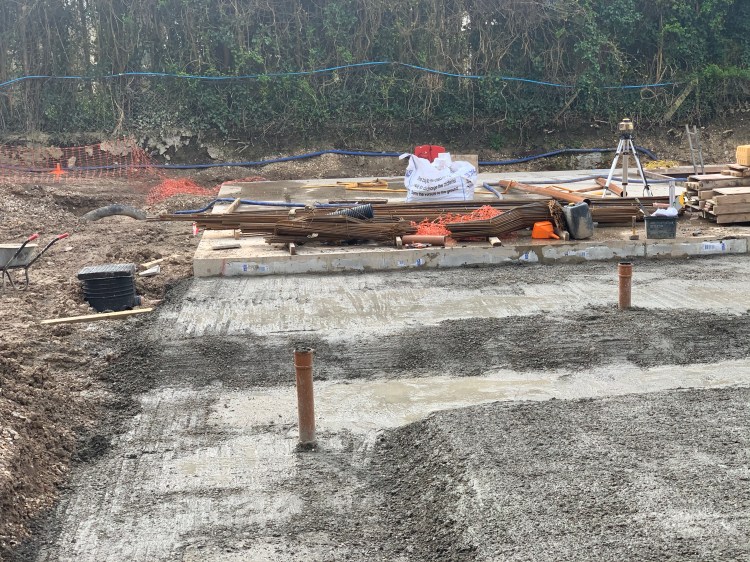
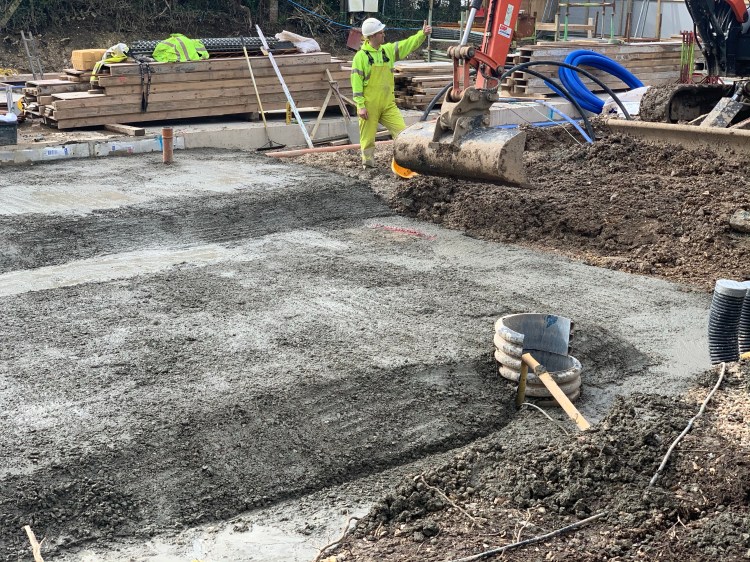
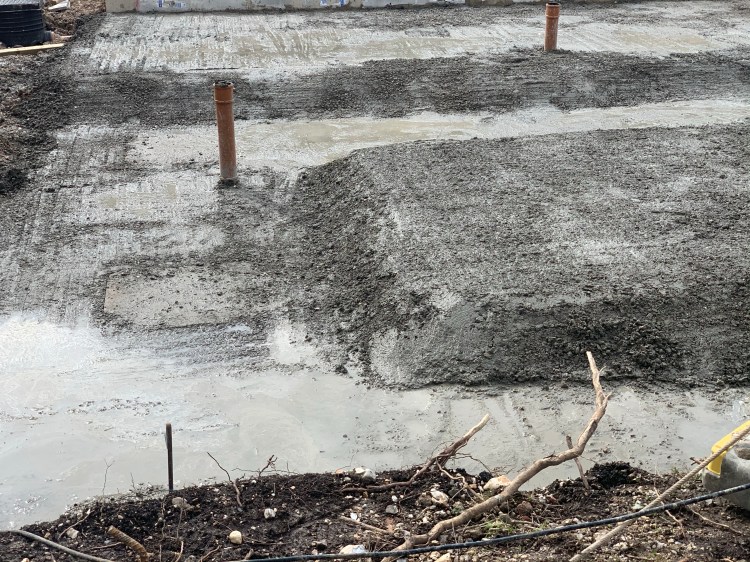
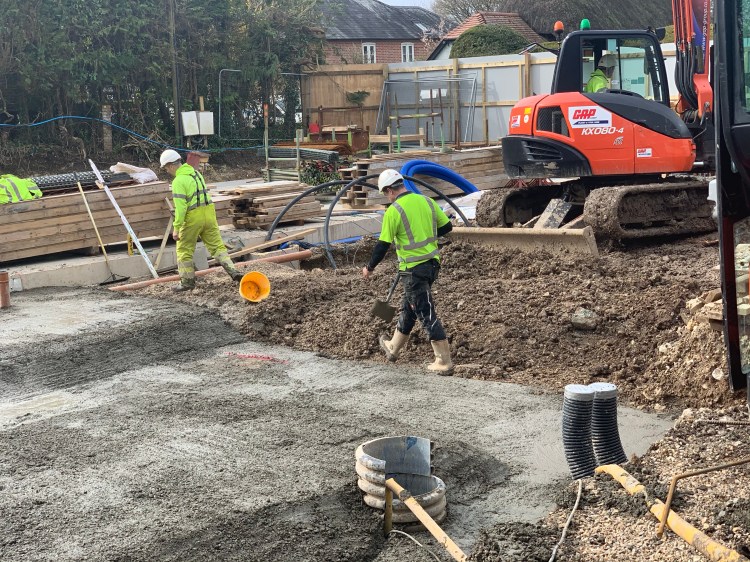

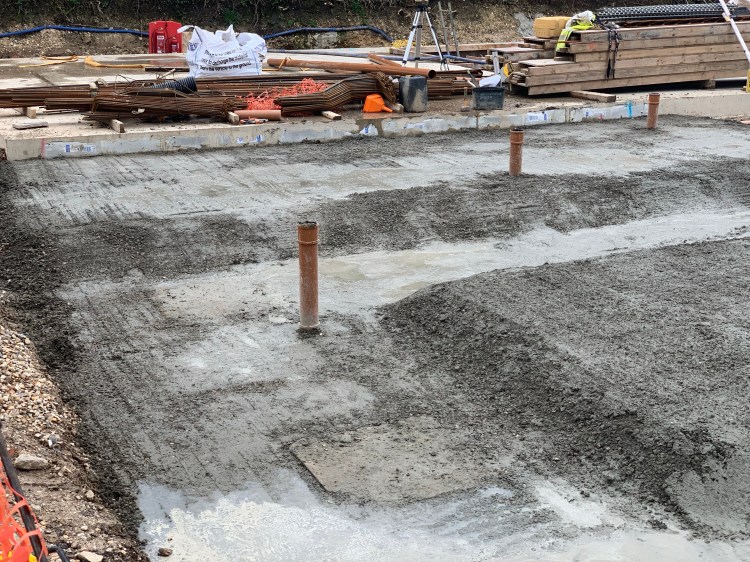
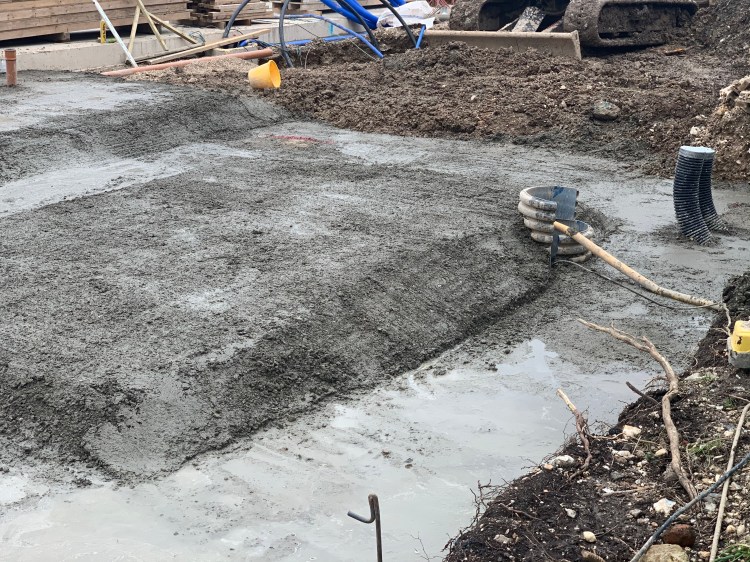
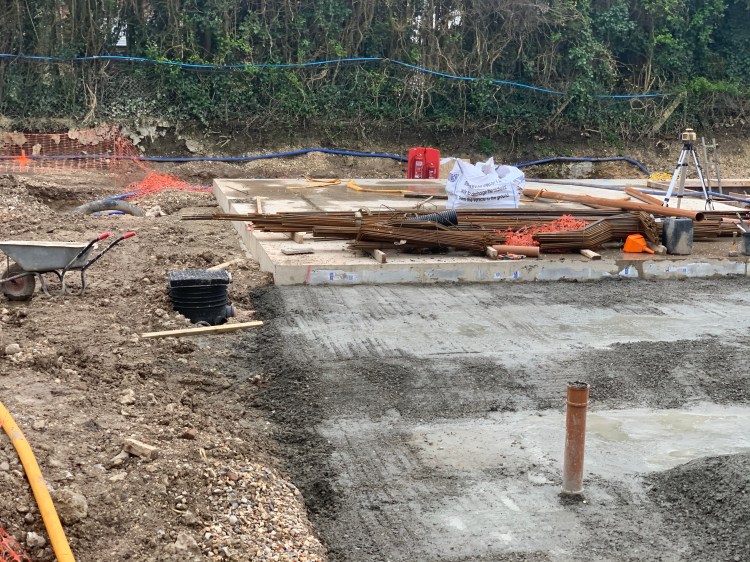
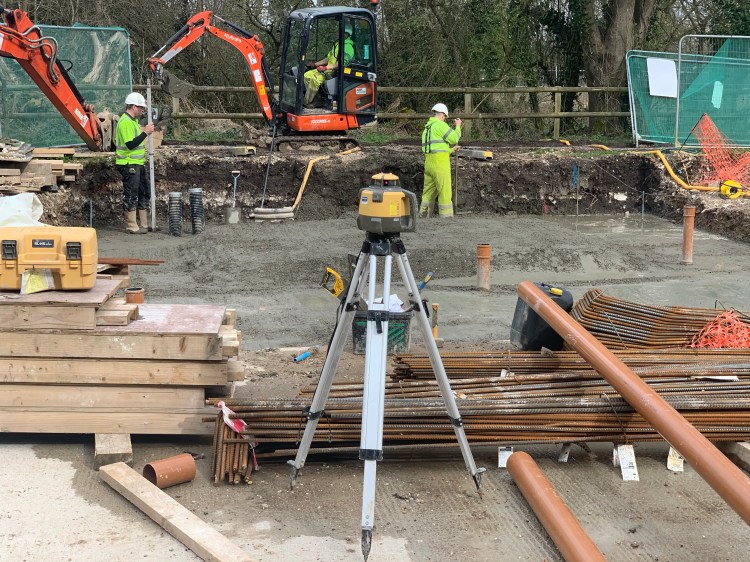
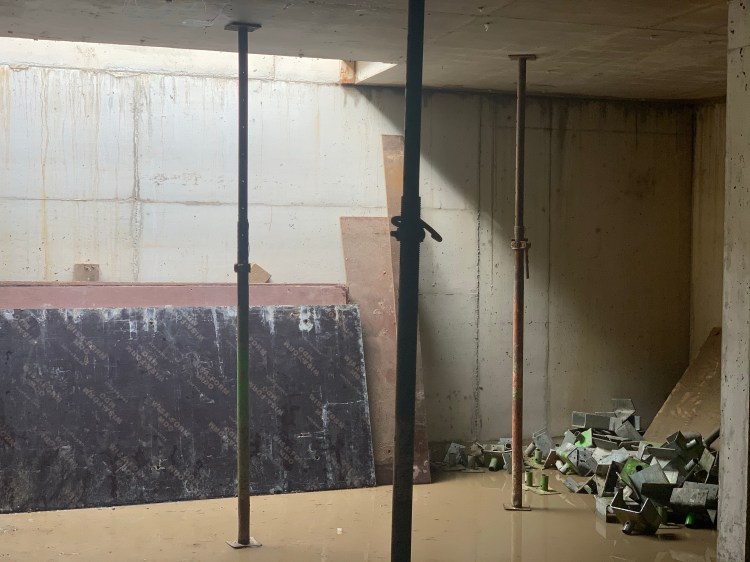


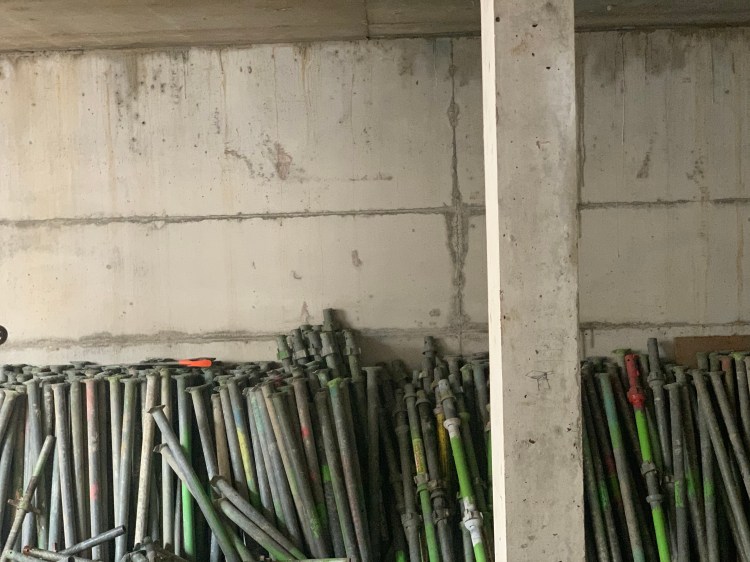
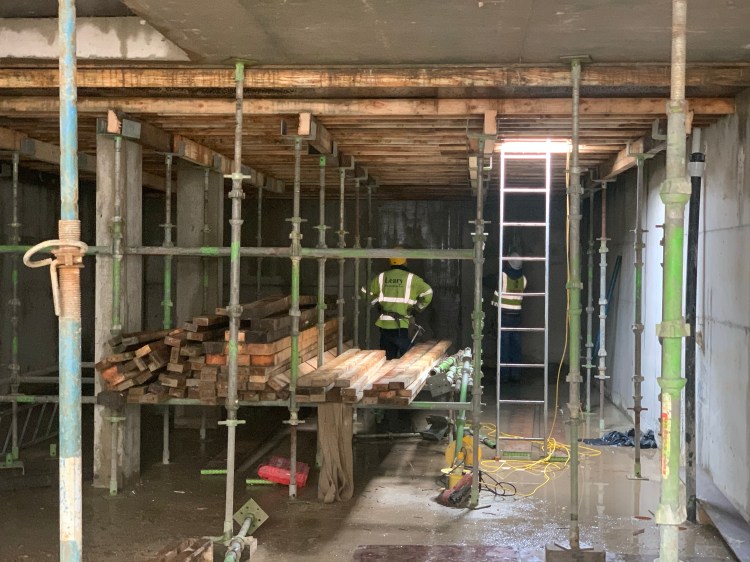
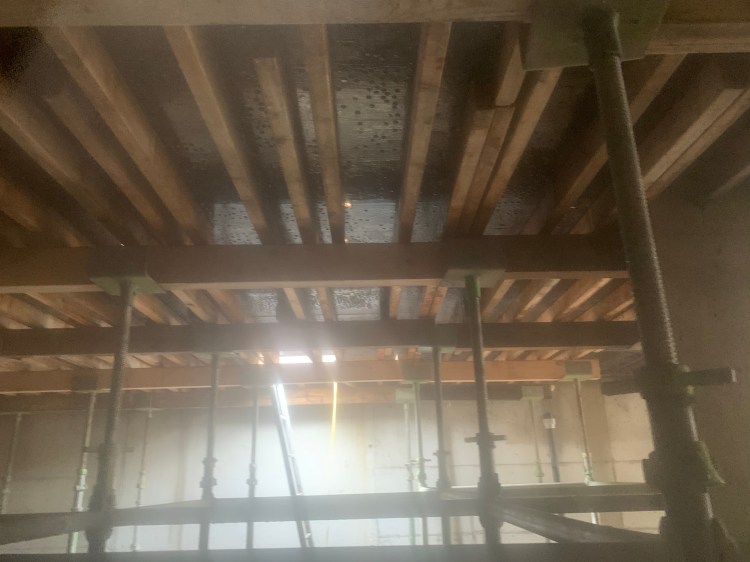
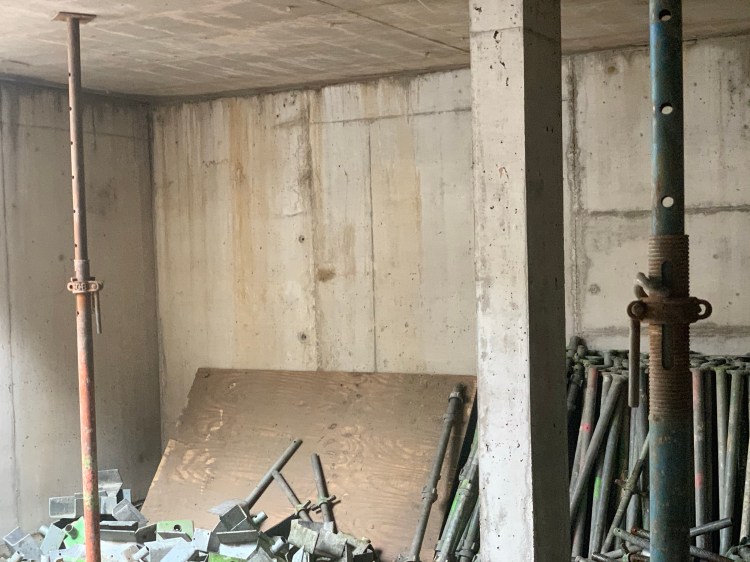
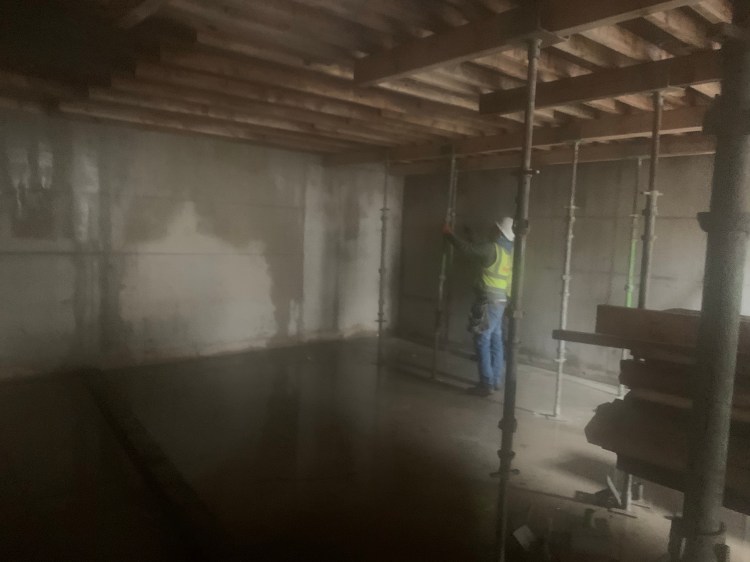
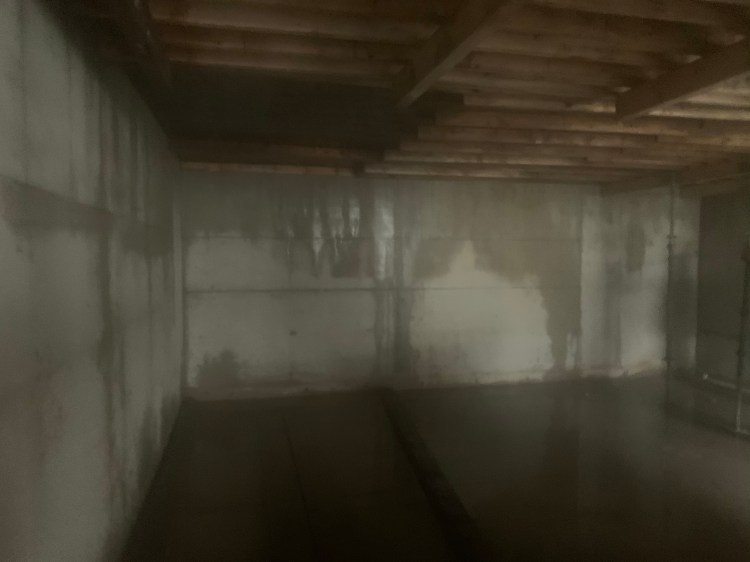
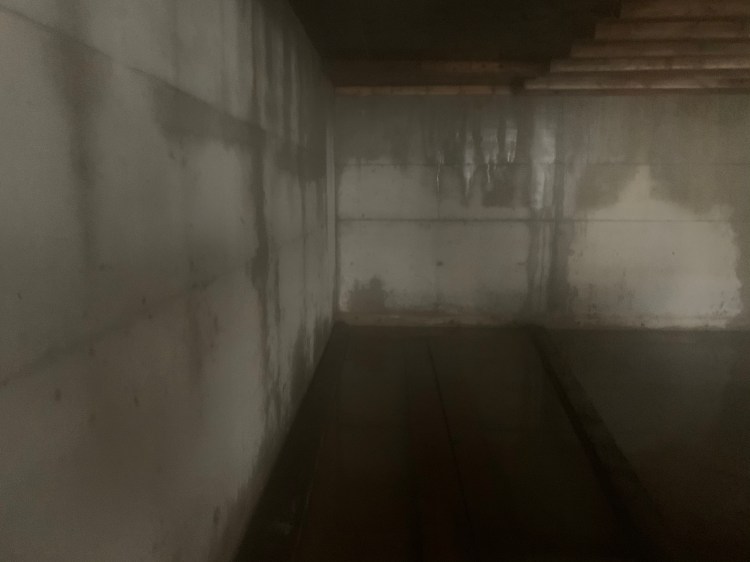
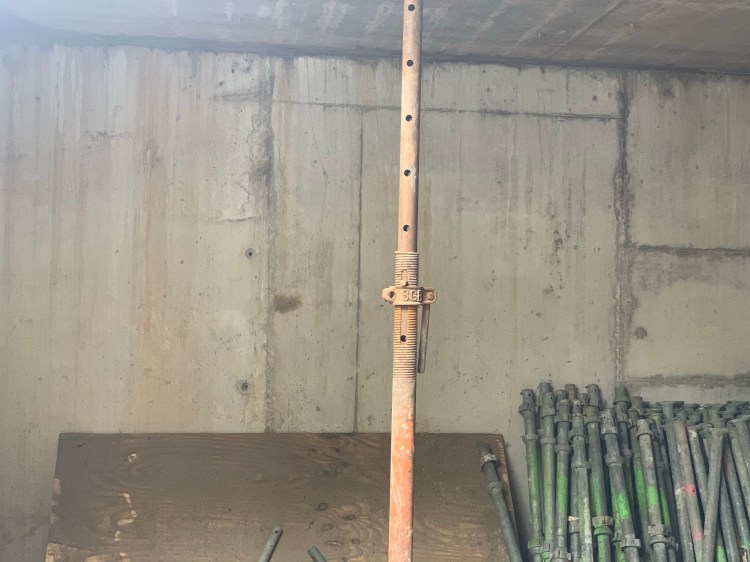
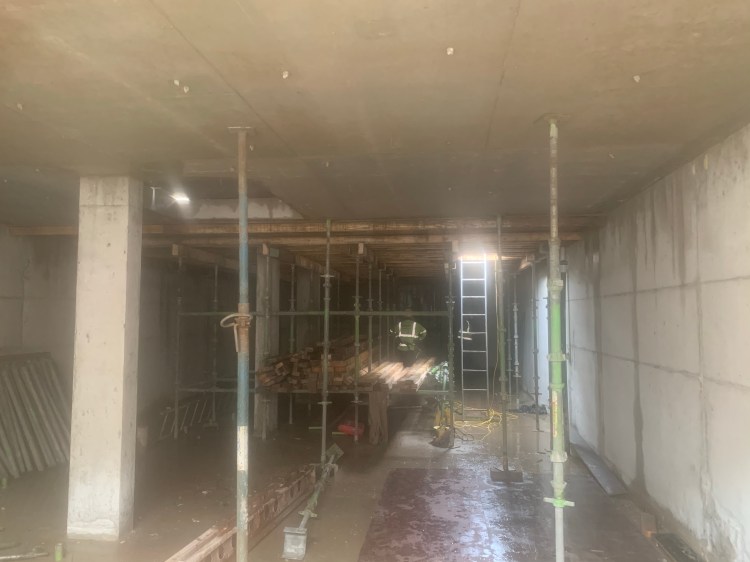
We’re very pleased with the quality of the work in the basement. It’s amazing how big it is. Clearly, the most expensive part of the build ! Later on the insulation and service walls will go into the basement as well as the staircase.
 Dianthus
One thought on “Week 29: Drainage and Preparation for Pavilion Transfer Slab”