As part of our focus on sustainability requirements, we discussed what our requirements are for electric vehicle charging with Max Fordham our Building Engineering Consultants and Urquhart and Hunt our Landscape Architects. See the Mechanical, Building and Sustainability Engineering post here.
We already have an electric vehicle, we’re anticipating that within 5 years, most homes will be required to have charging infrastructure by default in the UK.
I have to admit, I’m a big fan of the new Tesla Cybertruck which I hope we will own one day wrapped in Paisley Vinyl like our diesel VW California which I’d love to replace in future as it’s our accessibility vehicle for my son Lash.
On that basis, we decided we needed at least three charge points. Two in the front of the property and one at the rear mounted on the outer wall of the field shelter. This is in anticipation of when vehicles within the next 5-10 years move from Internal Combustion Engine(ICE) to Batteries and beyond.
In any case, we need access to at least two vehicles and assume our guests may wish to charge their electric vehicle if they are staying for a few hours or overnight.
With charging infrastructure, people assume the service station paradigm is what applies when in actual fact, very few people will need to rapid charge a car within an hour.
Rapid charging of car batteries reduces the lifespan of the batteries and the range over time. On that basis, 4-5 hours fast charge up to 7KW per hour is good enough for us.
Given, the car is only charged up to 80% of its range for normal use, it means for our typical daily usage of about 100 miles, 4-5 hours is more than enough to top it up. The reality is we don’t charge every day. It’s every other day at the moment.
The average mileage per week is catered for by most of the EV cars available today. We’ve been using our current EV for over a year. 95% of our charging is at home and we rarely use Rapid Chargers at service stations or public charging infrastructure. Therefore, convenience, dwell time and residential charging are our key requirements going forward.
We’re also assuming induction charging will become ubiquitous in future. This is perfect for future proofing and accessibility. More importantly, we wanted a solution that is sympathetic to the environment and aesthetic is part and parcel of the product design.
I am fortunate to be on the advisory board of a smart mobility start-up called Connected Kerb, we provide a smart cities platform that integrates both power and data at kerbside to support electric and autonomous vehicles, and the application of advanced IoT technologies. Connected Kerb’s platform is innovated to empower better-connected communities, promote liveable streets, minimise environmental impact and amplify the transition to electric vehicles for all people.
This is where the Connected Kerb solution trumps all others at the moment as it already supports induction charging with the Magment wireless charging mat.
One of the design themes that is key for our landscape design is a naturalistic environment filled with drifts of perennial planting and minimal hard landscaping. All hard surfaces will need to be permeable with emphasis on natural finishing.
On that basis, the aesthetics of the Connected Kerb products all fit the bill given they’re made from recycled tyres and plastic. As is the case with the Armadillo, Gecko and Limpet.
First, we had to check that the electricity supply to the house will be large enough to cover the charging loads of the EV charging points. We referenced the site and services plan prepared by Max Fordham for the Connected Kerb team to advice on suitability.
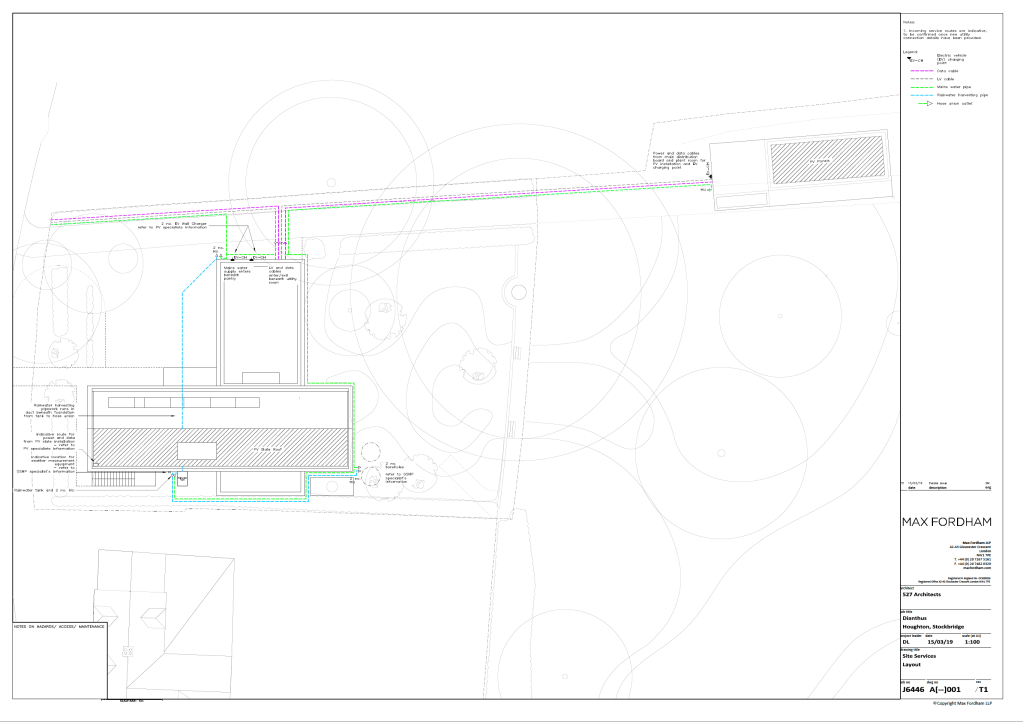
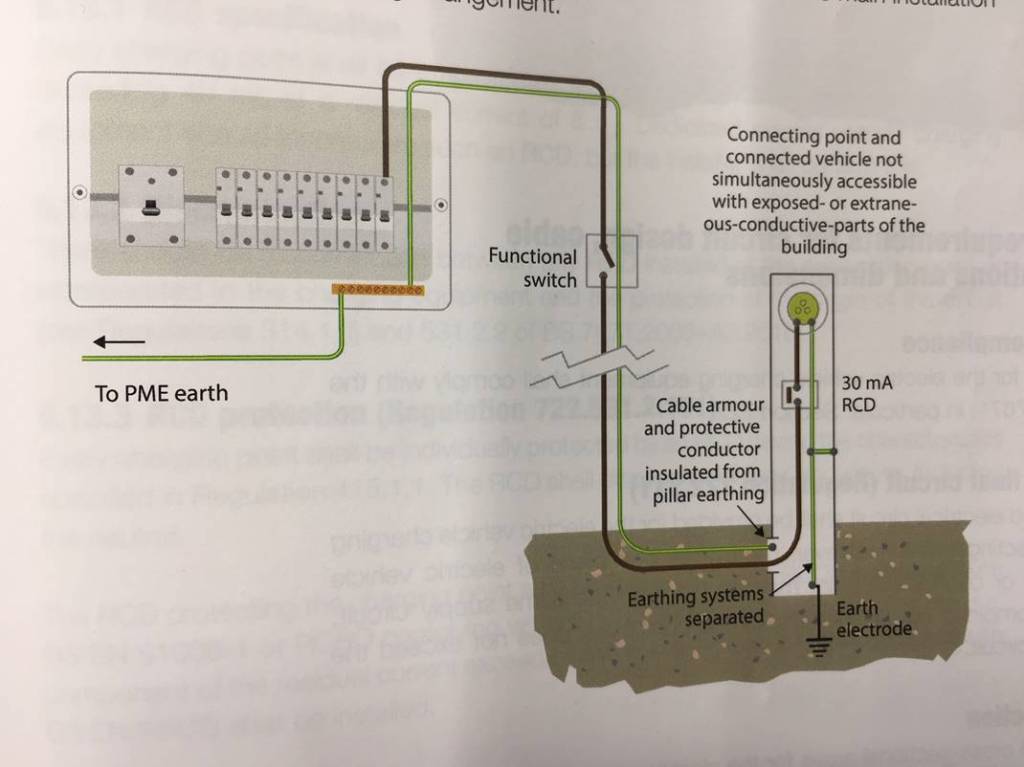
On the back of this, Connected Kerb provided some electrical connection details as indicated in the below diagram and also confirmed we’ll be using a single phase supply per charge point.
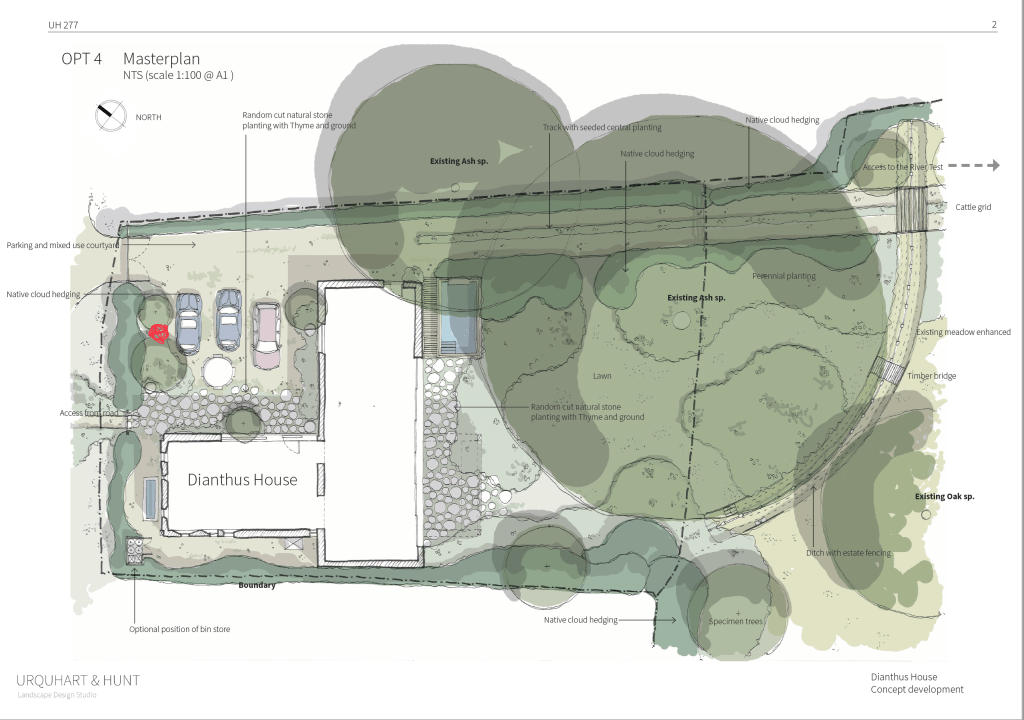
Following this, we reviewed the available products and selected the Gecko for the front of the house in the area marked in red on the landscape diagram below.
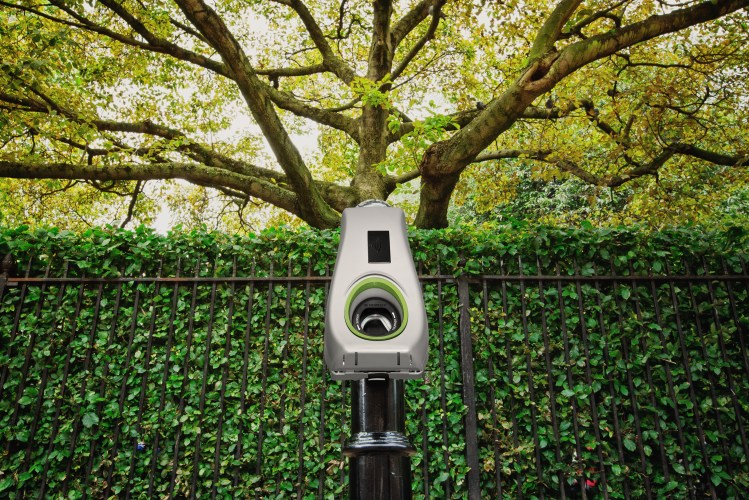
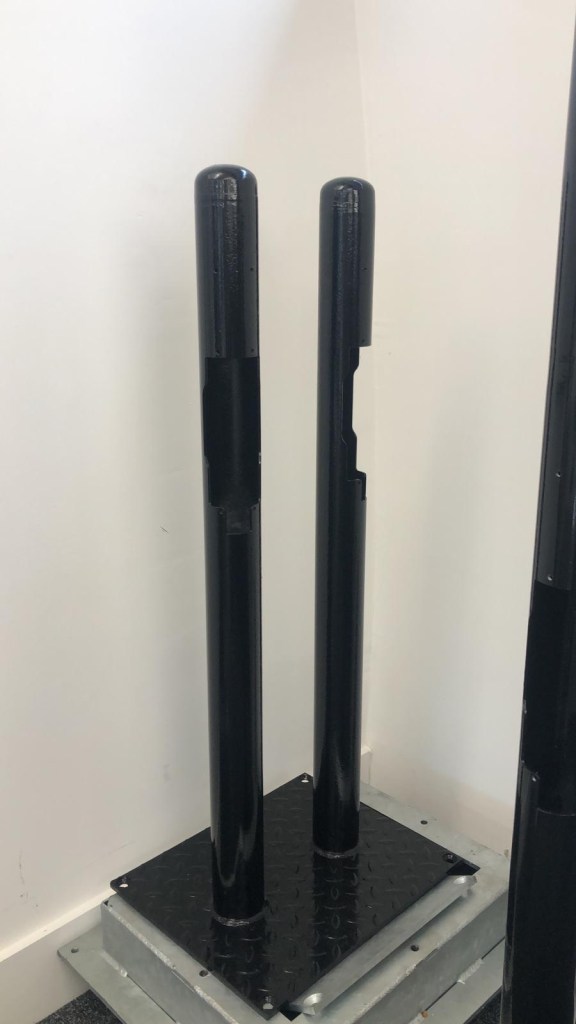
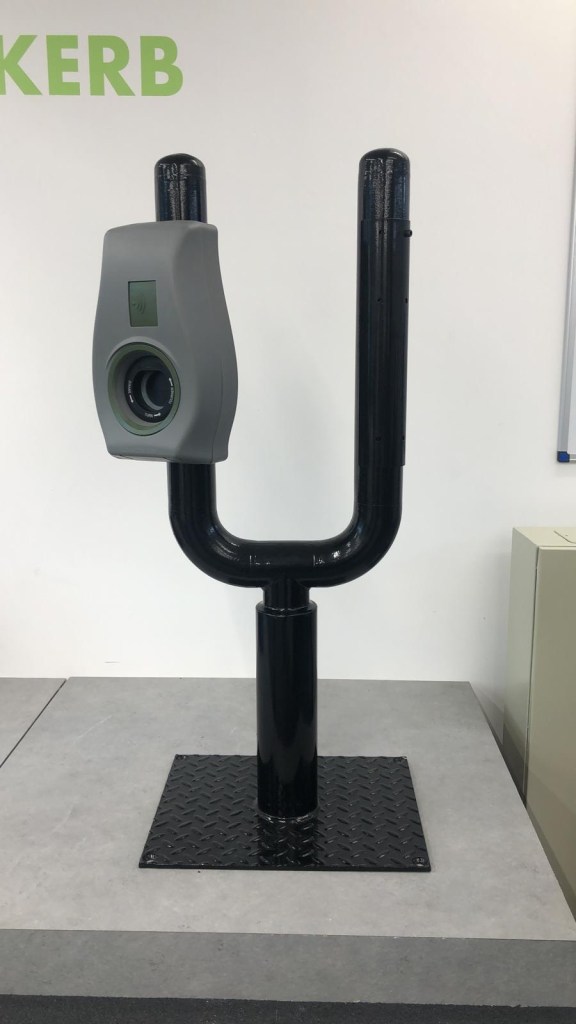
We selected the Gecko for several reasons, It is creatively designed to fit to existing street furniture, such as parking posts or bollards, the Gecko connects either as a single or paired socket to a subterranean master charger unit, monitoring and controlling power flow to the socket and vehicle. It is a low visual impact solution, it is perfectly suited to on-street residential landscapes where its sympathetic design blends discretely into the established street scene.
As are all our products, the Gecko is designed for environments where there is prolonged dwell time, offering a 3.5-7kWh charge. The Gecko is powered by The Tardis – an advanced mobility platform. That is one of the USPs of Connected Kerb.
We’re also fortunate to have Virgin Media installed to the property already which means with the Tardis Node box, we can provide data services to the community in the future, provide air pollution monitoring and potentially 5G data services. What’s not to like?
Given we’re going to be generating our own electricity, we’d like to be able to offer local folks charge point access if we can store unused energy from our solar tiles and panels in our Tesla Powerwall units.
Here are some of the photos of the Gecko below. We can get the charging unit itself in olive including the Cactii Bollard in Olive to blend with the landscape. This ensures it’s not as intrusive as some of the horrible petrol station pump lookalikes that are widely available on the market at the moment.
For the rear, we’ll add a Limpet to the Field Shelter, We don’t expect to use this one often but you never know. The Limpet is made from recycled tyres and is designed to fit onto existing wall structures, connected in clusters of 5-10 sockets to a wall-mounted master charger unit, monitoring and controlling power flow to the socket and vehicle. Durable, discrete and environmentally sympathetic, it is best suited for public / private below-ground and multi-storey car parks where ground-mounted solutions are less appropriate. As are all our products, the Limpet is designed for environments where there is prolonged dwell time, offering a 3.5-7kWh charge. The Limpet is powered by The Tardis – an advanced mobility platform.

As an aside, we’re on the Octopus Go tariff. Which gives us 5p per kilowatt hour charge from 12:30am-4:30am. Having used it for a few months, we’re saving money by effectively paying around 1p per mile for our overnight charge. Hopefully, that makes a compelling case for anyone doubting why EV’s will save us more money in the long term vs. ICE cars. Of course, the cost of batteries need to come down. I don’t doubt we’re going to hit an inflection point within the next 5-10 years when EVs are cheaper to buy than ICE cars.
The way I encourage people to think about it is ask them to calculate how much they spend on fuel each month. What if you cut that by 2/3 and put the money saved in an ISA Stock and Shares Account and watch your money compound?
Yes, the key issue is up front cost of EV’s at the moment. But if you look at the Hyundai Kona or Tesla Model 3, the running costs trumps any ICE car out there today. There are great leasing deals about and in any case, it makes sense to lease them if new except you’re buying second hand of course.
 Dianthus
Wow, so coooool!
LikeLike
Thanks @Eric and Sally. It’s certainly an exciting experience. Loads of learning.
LikeLike
Perfect just what I was searching for! .
LikeLike