My daughter will say I’m obsessed with Flint. I have to admit, I’m a flint voyeur. As I cycle through local villages in Hampshire, I can’t help but look at how they’ve cladded the houses with flint. The Test Valley where we live is sitting on top of flint. Anywhere you walk around here, just dig a little and you uncover loads of flint.
The River Test is one of the best chalk rivers in the world. Inevitably, anywhere you find chalk you’ll find flint.
According to Wikipedia, Flint is a sedimentary cryptocrystalline form of the mineral quartz,[1][2] categorized as the variety of chert that occurs in chalk or marly limestone. Flint was widely used historically to make stone tools and start fires.
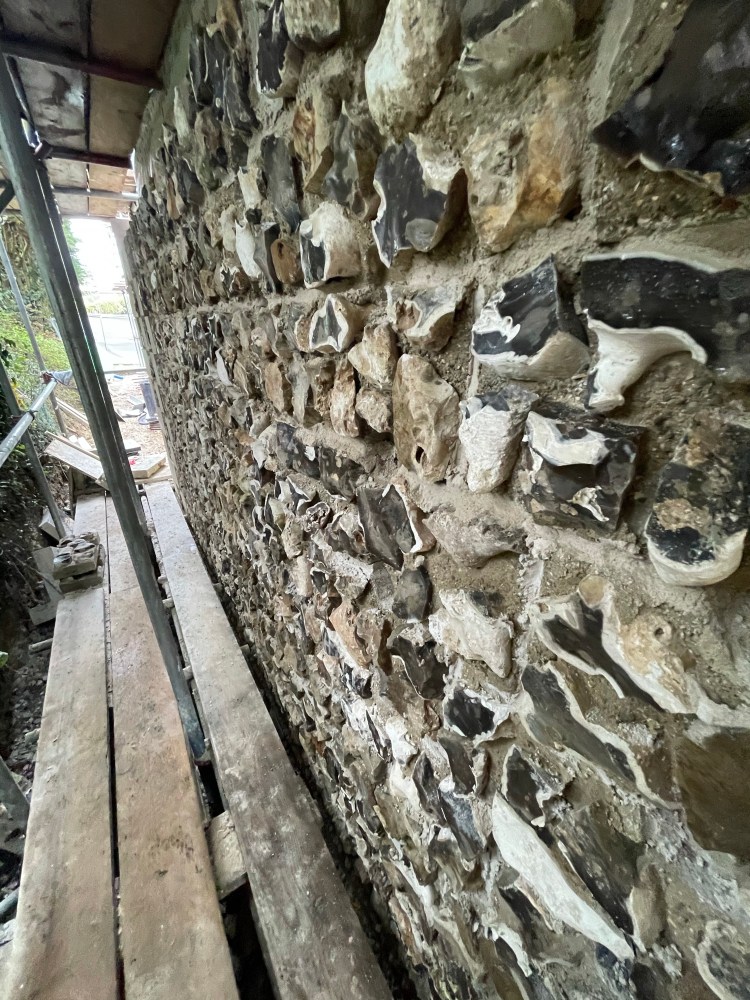
It occurs chiefly as nodules and masses in sedimentary rocks, such as chalks and limestones.[3][4] Inside the nodule, flint is usually dark grey, black, green, white or brown in colour, and often has a glassy or waxy appearance. A thin layer on the outside of the nodules is usually different in colour, typically white and rough in texture. The nodules can often be found along streams and beaches.
Flint breaks and chips into sharp-edged pieces, making it useful for knife blades and other cutting tools. The use of flint to make stone tools dates back hundreds of thousands of years, and flint’s extreme durability has made it possible to accurately date its use over this time. Flint is one of the primary materials used to define the Stone Age.
During the Stone Age, access to flint was so important for survival that people would travel or trade to obtain flint. Flint Ridge in Ohio was an important source of flint and Native Americans extracted the flint from hundreds of quarries along the ridge. This “Ohio Flint” was traded across the eastern United States and has been found as far west as the Rocky Mountains and south around the Gulf of Mexico.[5]
When struck against steel, flint will produce enough sparks to ignite a fire with the correct tinder, or gunpowder used in weapons. Although it has been superseded in these uses by different processes (the percussion cap), or materials, (ferrocerium), “flint” has lent its name as generic term for a fire starter.
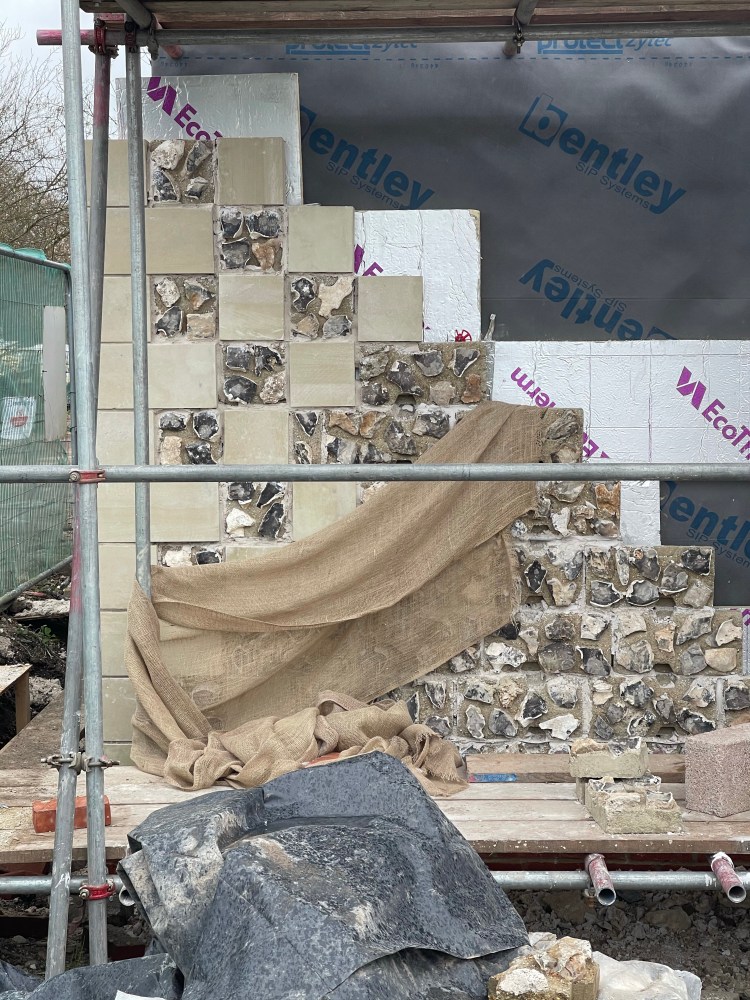
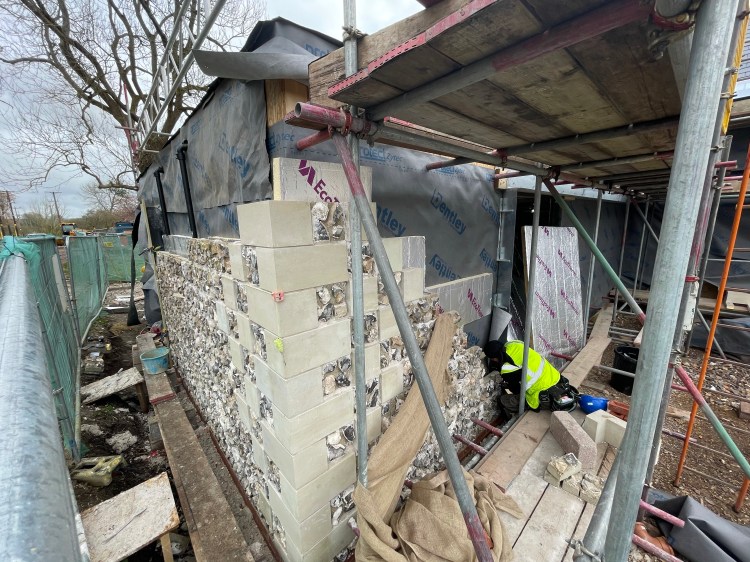
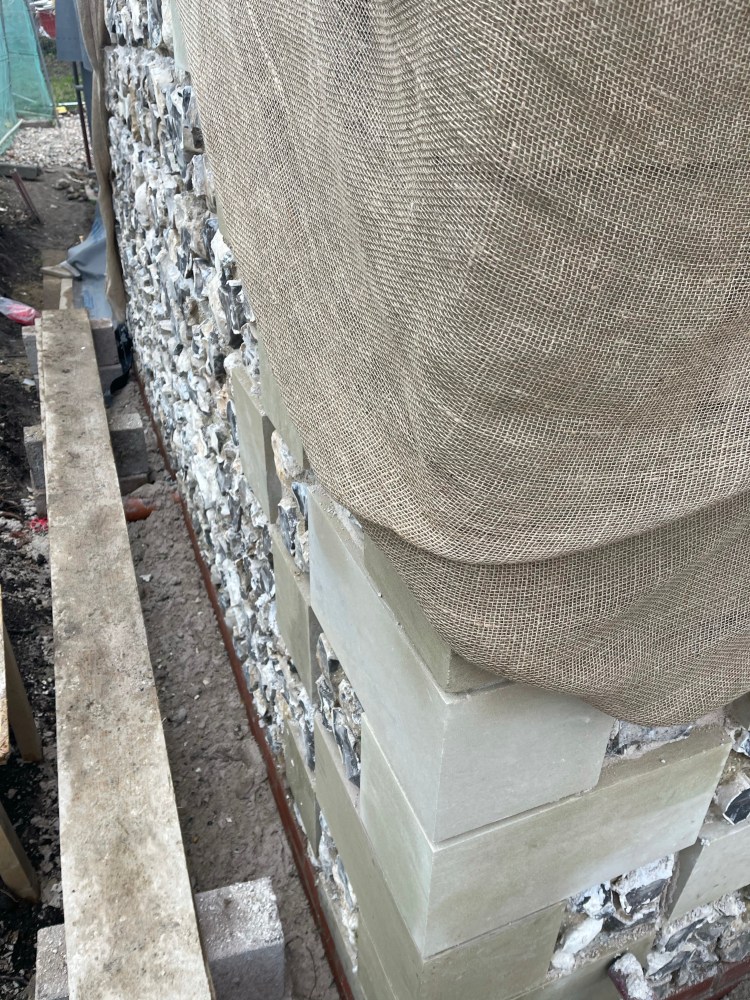
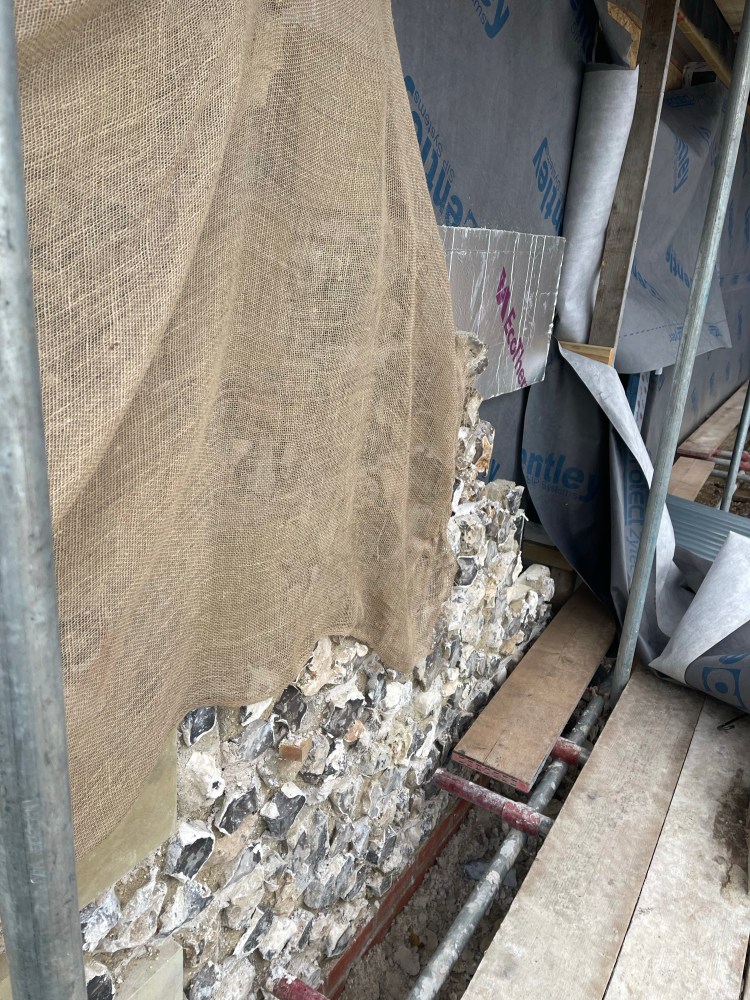
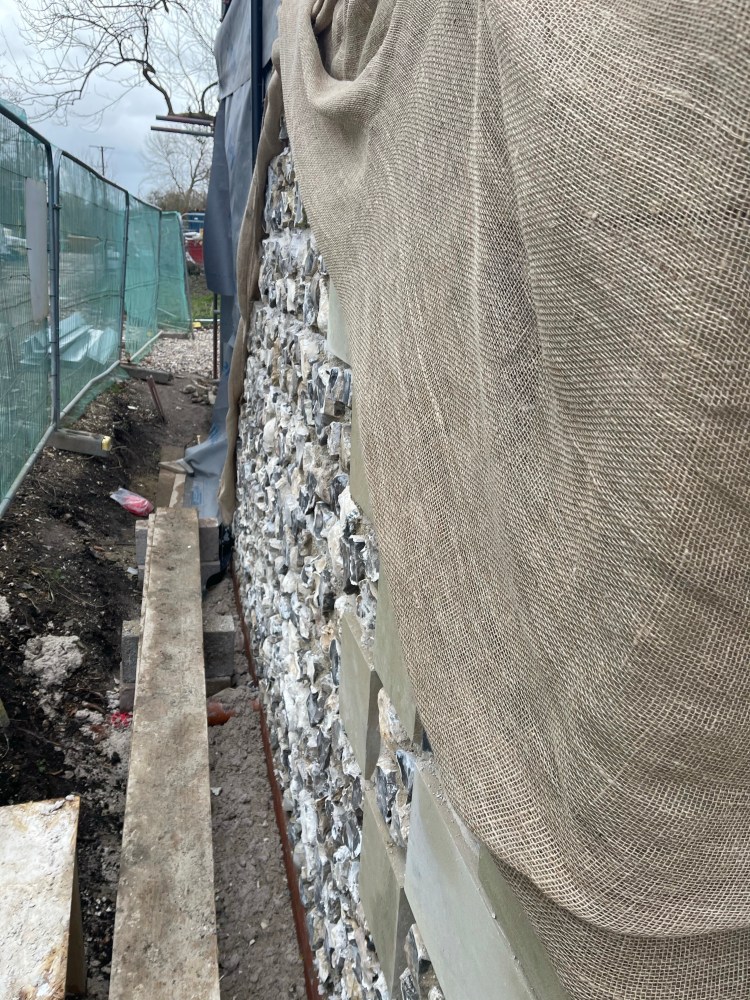
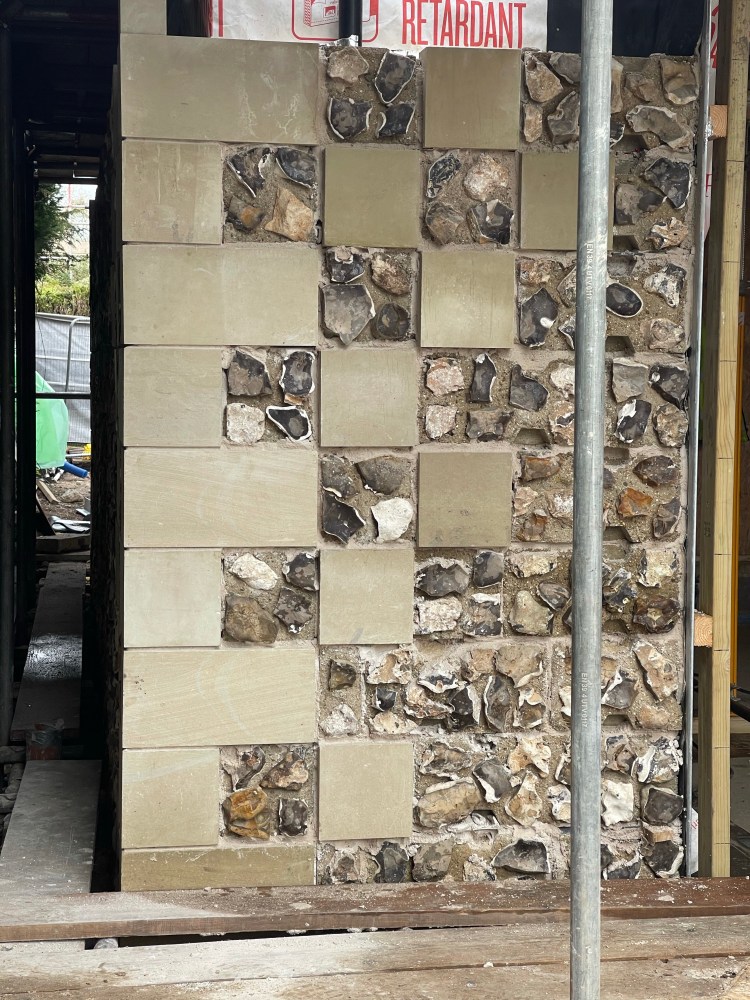
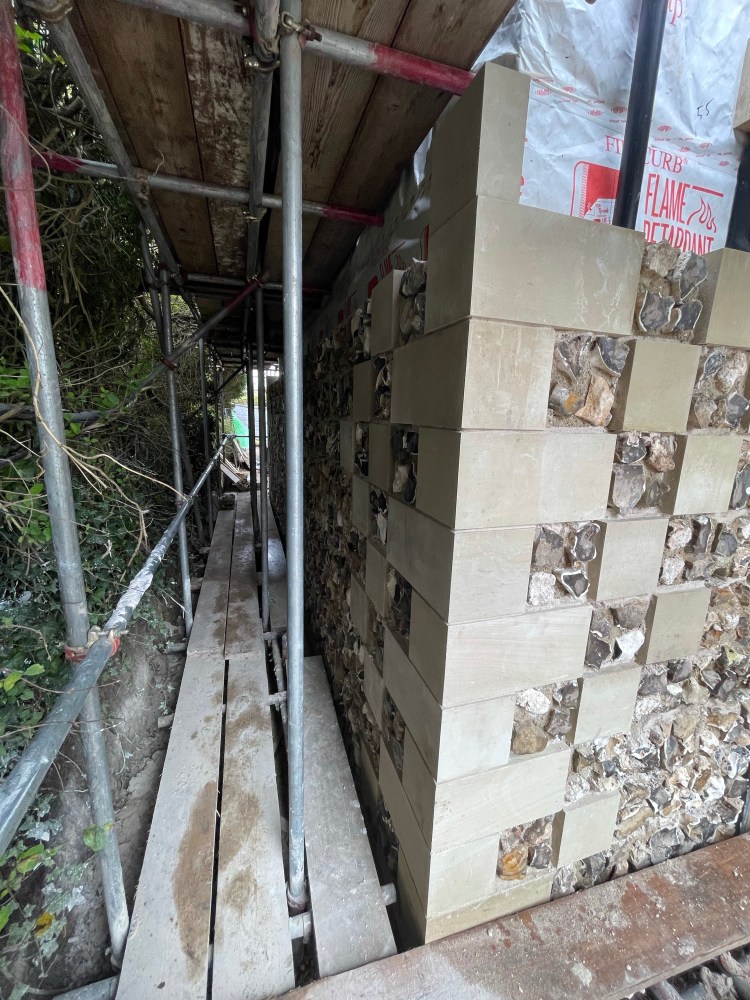
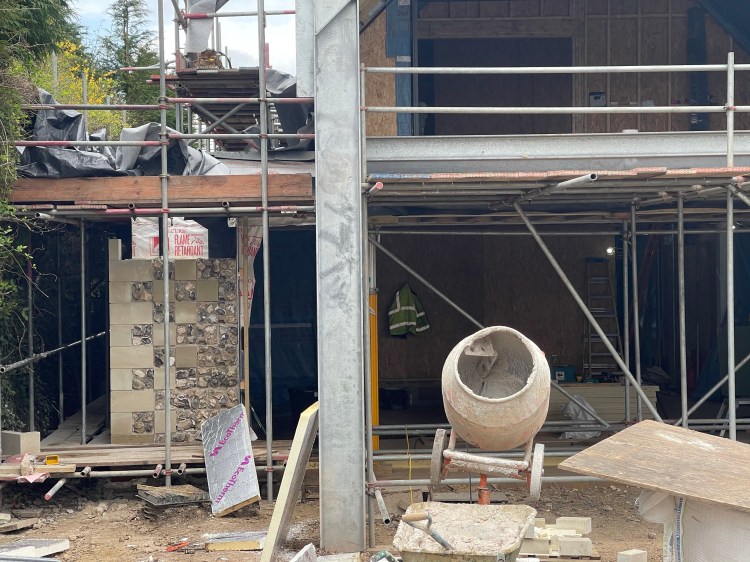
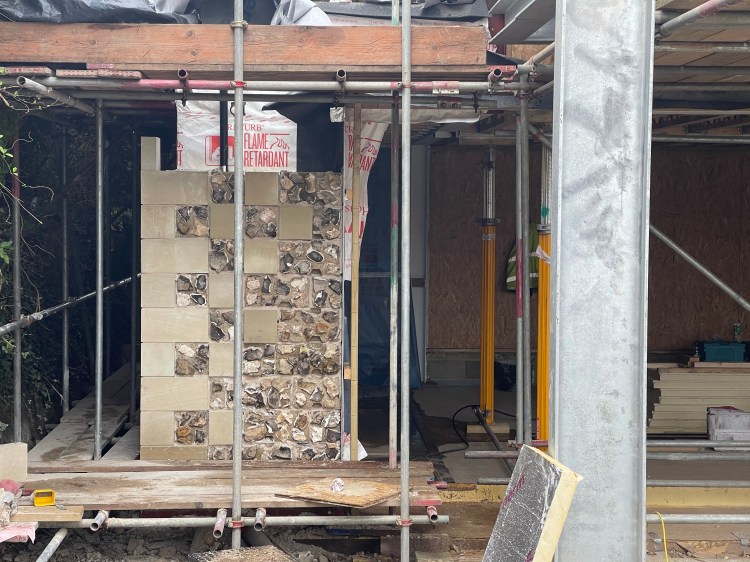
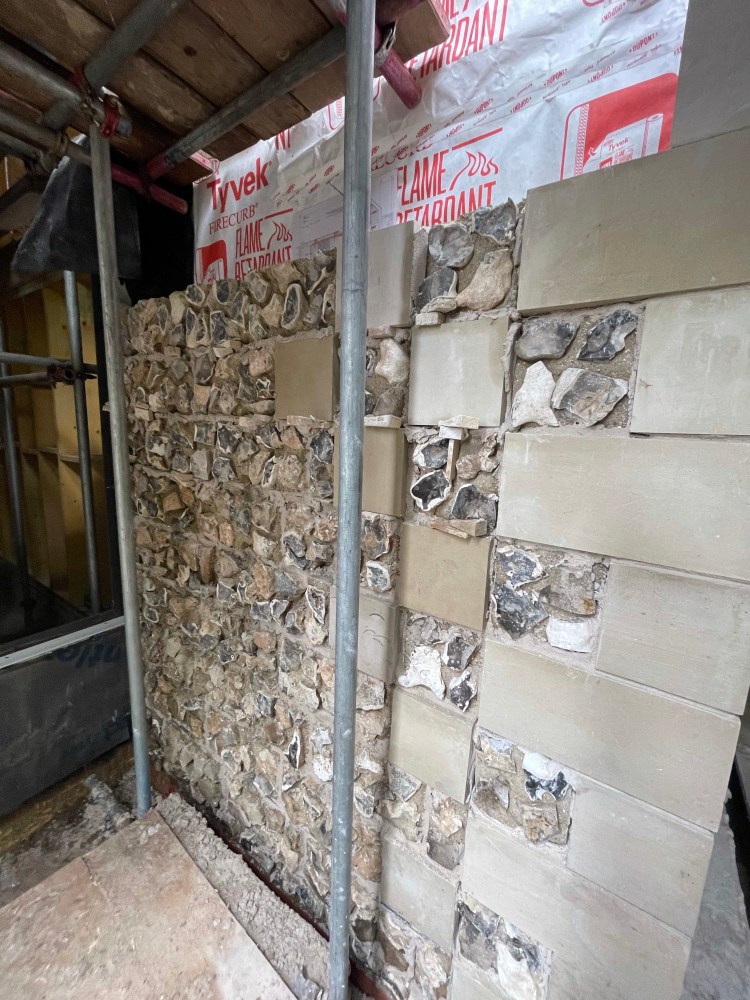
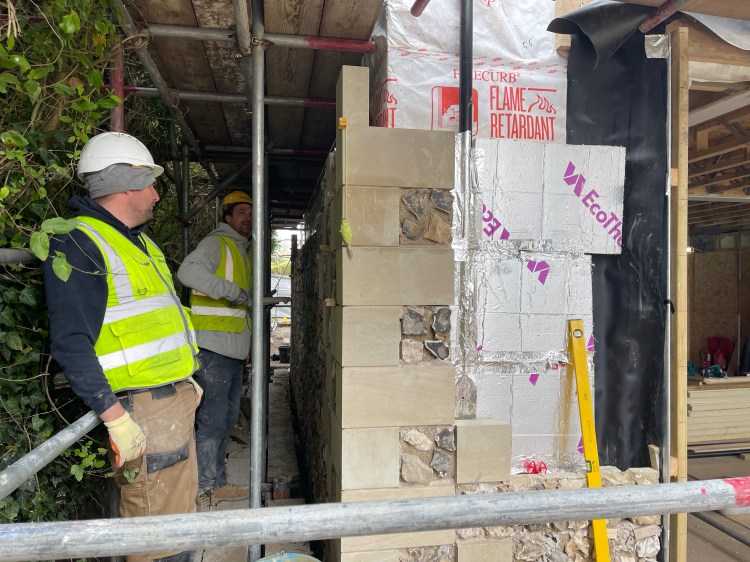
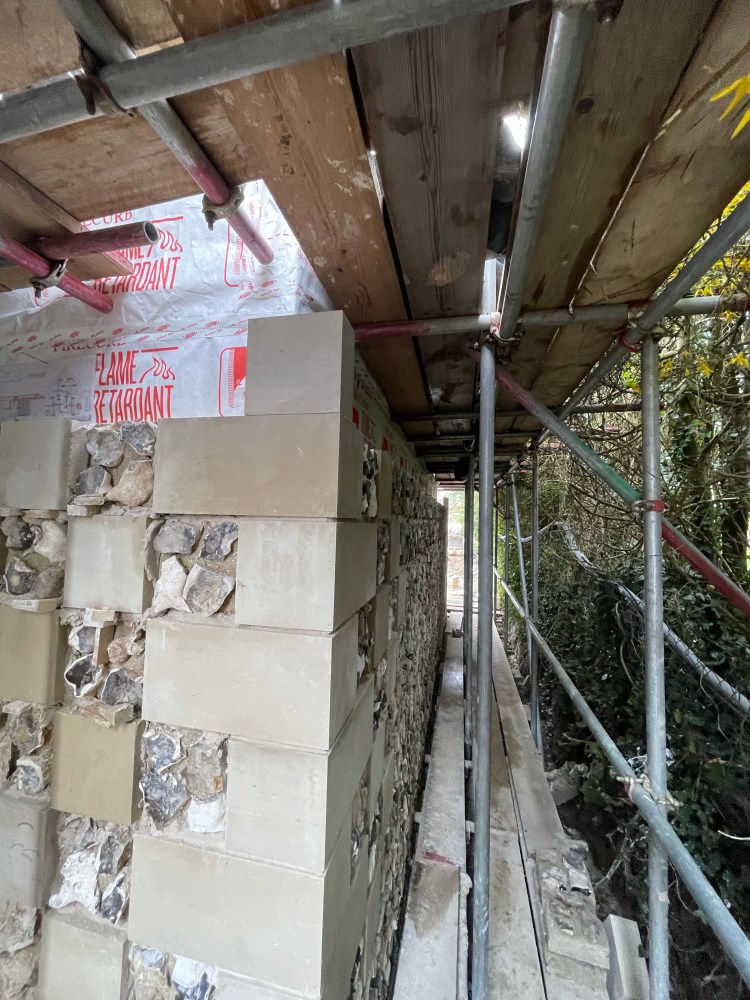
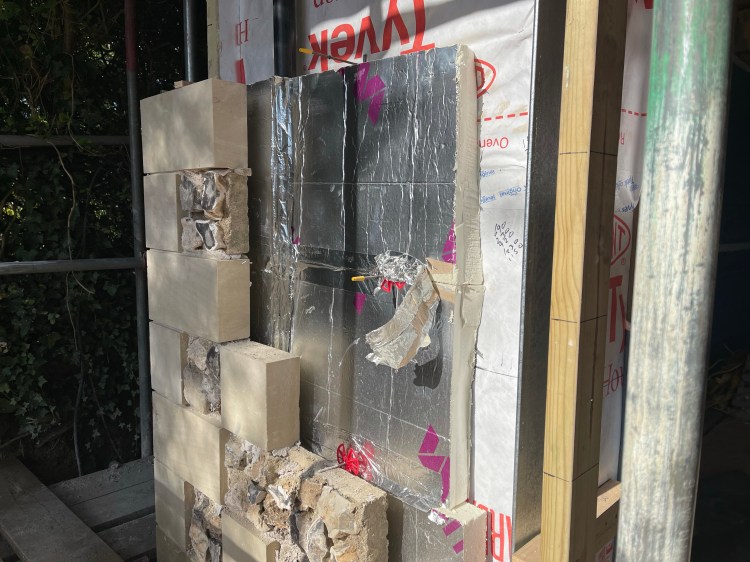
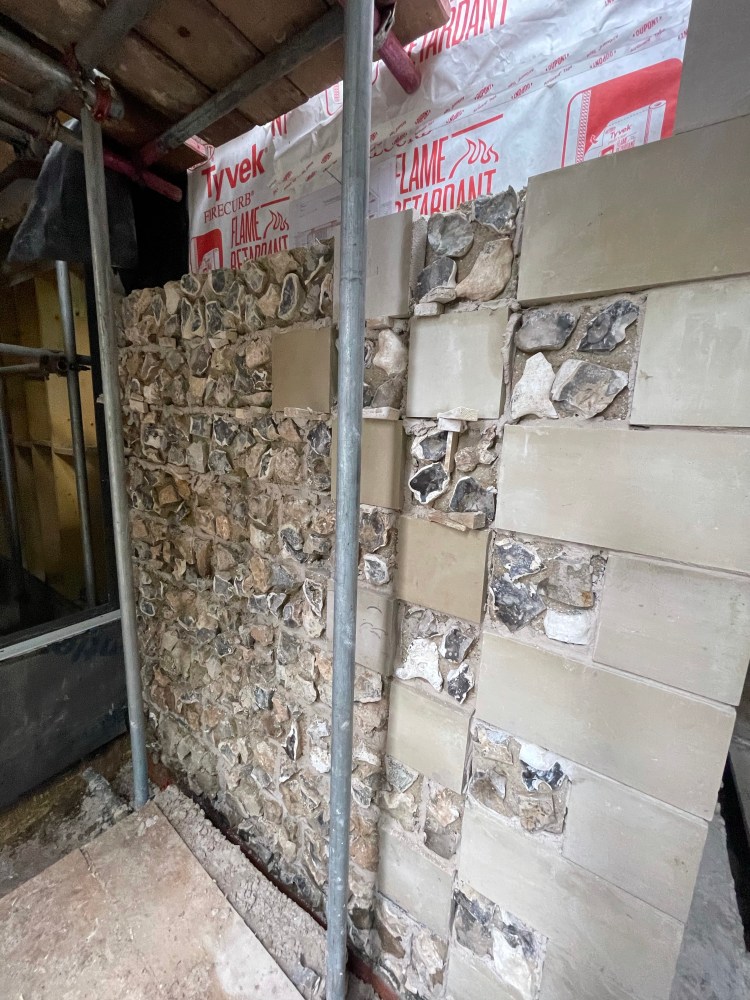
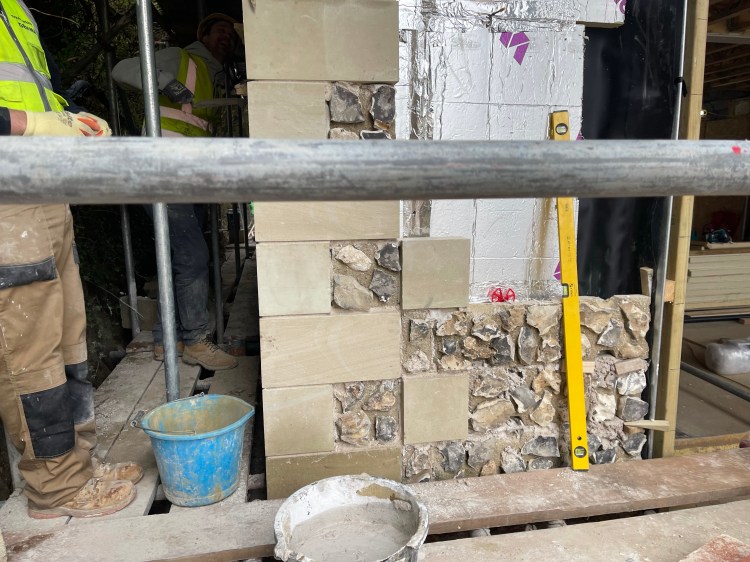
I wrote about our flint mood board in a previous post. Over the last few weeks, the masons have been onsite installing the flint cladding. We’ve gone for a 20% unknapped and 80% knapped flint set on pocket blocks by a family run business based in Weyhill called Pocket Block. The Field Flint is quarried locally from Binley in the Parish of St Mary Bourne in Hampshire.
We tried to get some from some of the local farmers that have quarries without success. However, with the support of the chair of our parish council Alan Young, the plan is to pick some field flint from a quarry locally for the flint boundary wall for the front of the house.
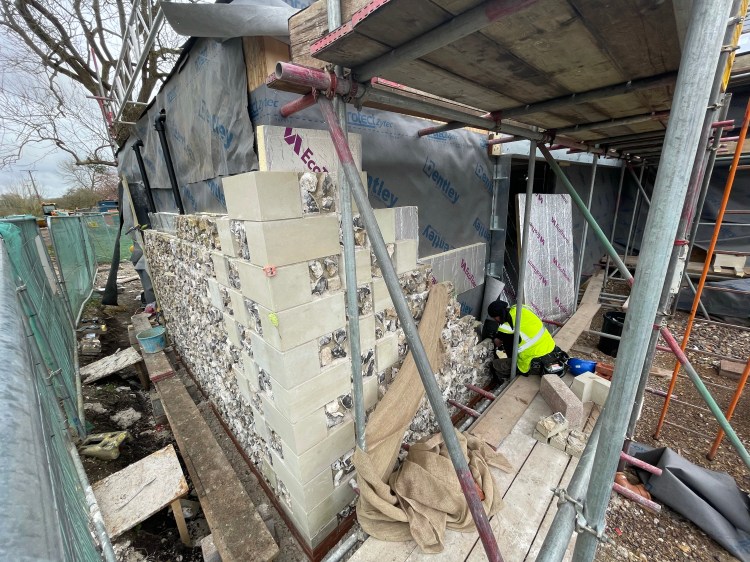
As mentioned in the mood board post, we’re also using Salisbury Cathedral Quions from Lovell Stone Group as the corner stones. Specifically, we’re using the Chicksgrove Ashlar and the Hollow Quions. The rendering of the flint and quoins will be finished flush using lime mortar. It’s a delicate craft by these master crafts men.
The village design statement specifies either clay bricks or flint cladding. We didn’t need much persuasion to decide on flint. One consideration for us was we didn’t want a pastiche finish. We wanted to put our own stamp on it.
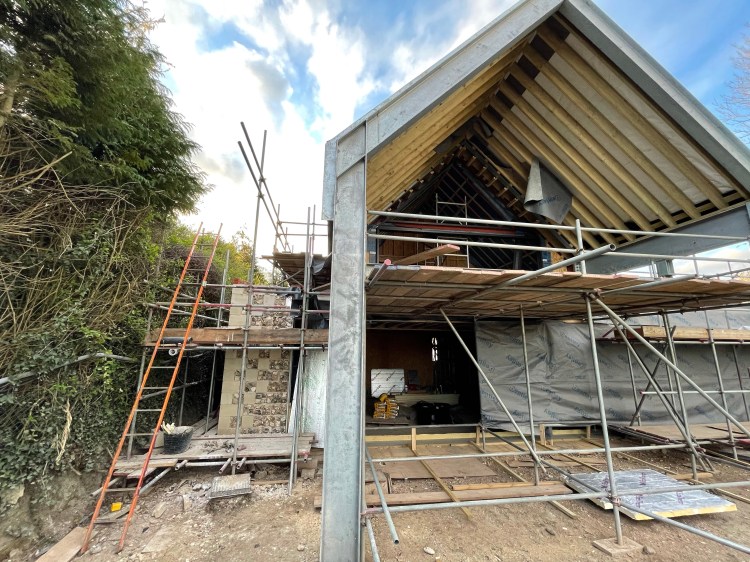
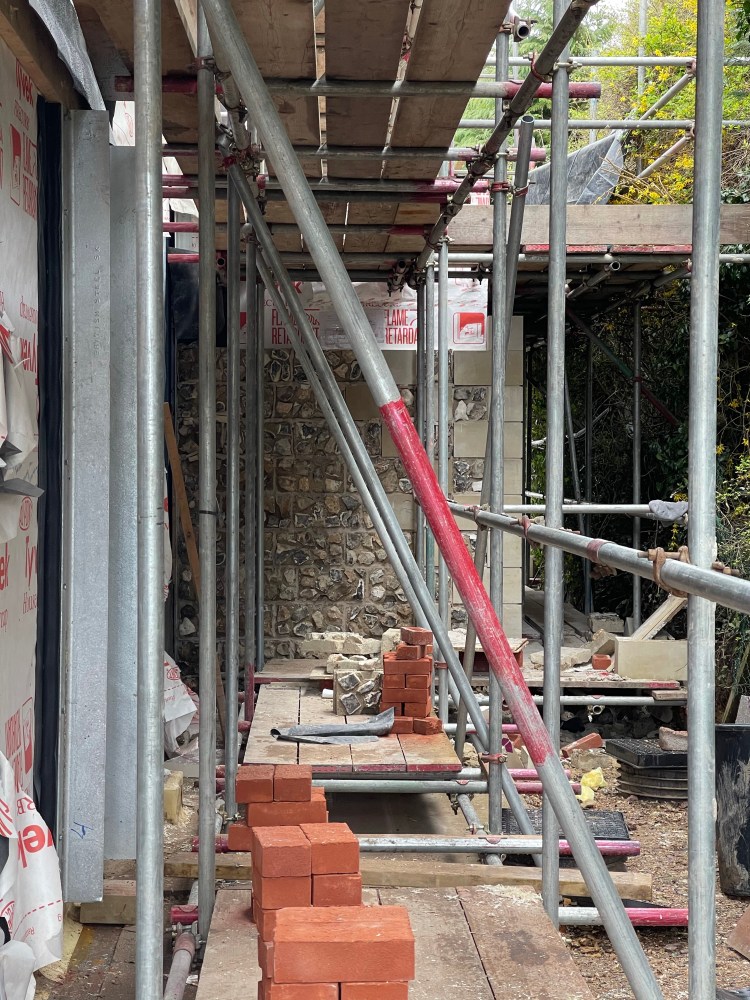
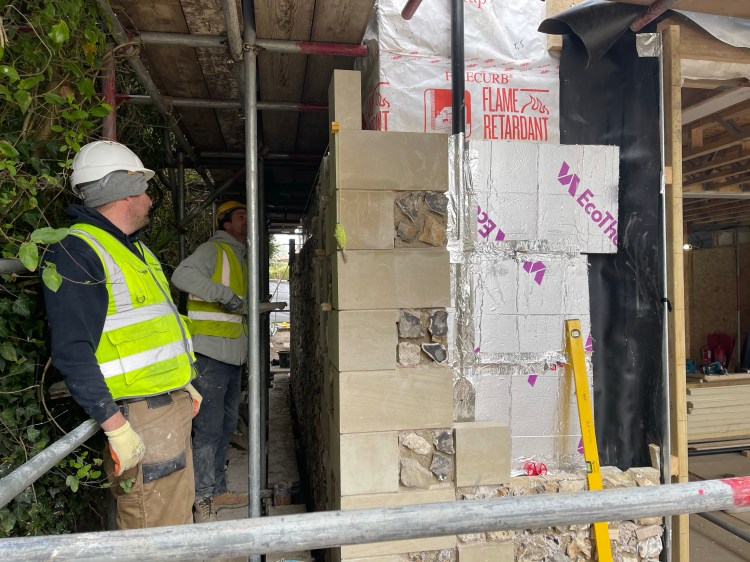
With the support of our Architect, Rob Jackson, we’re very pleased with the flint cladding as it’s taking shape. The masons are currently halfway through the cladding. Once they finish installing the pocket stones, they will render it with lime mortar.
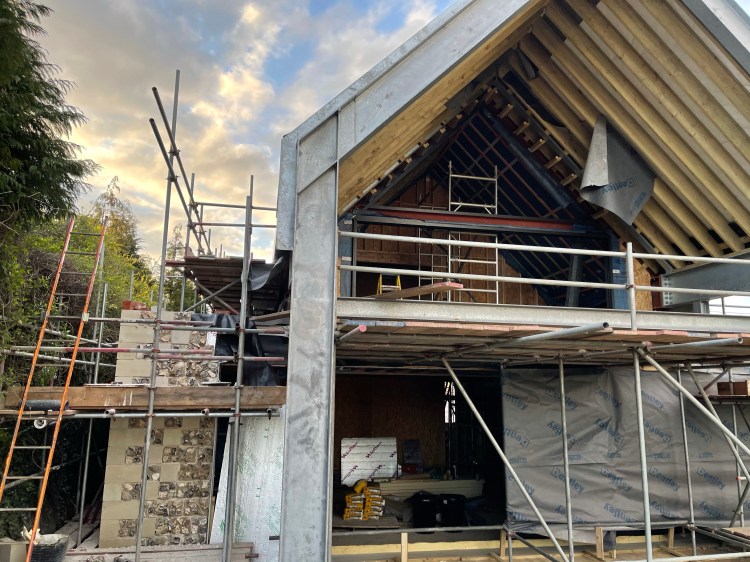
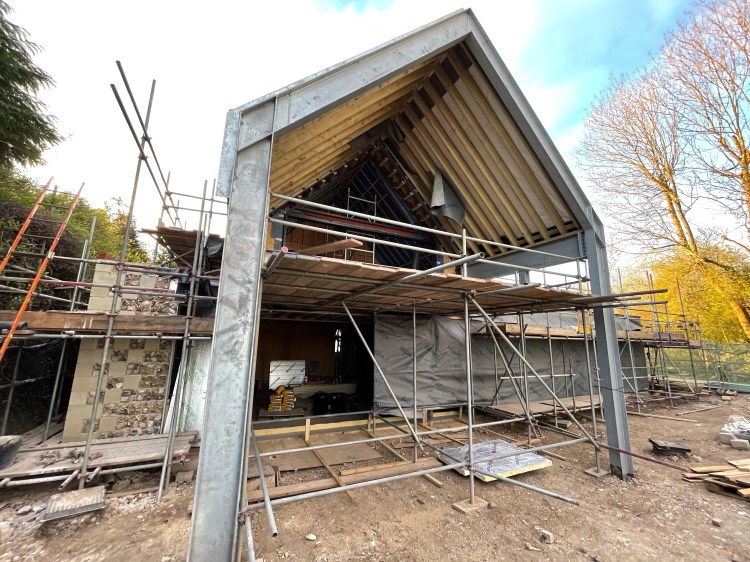
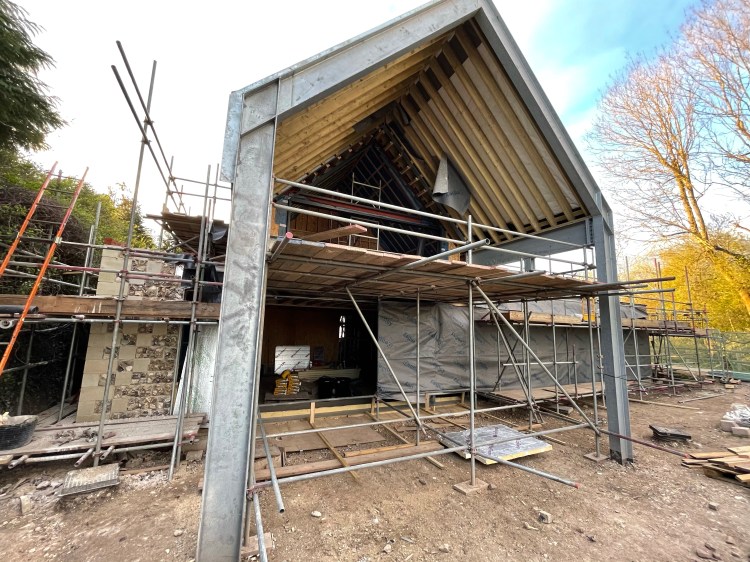
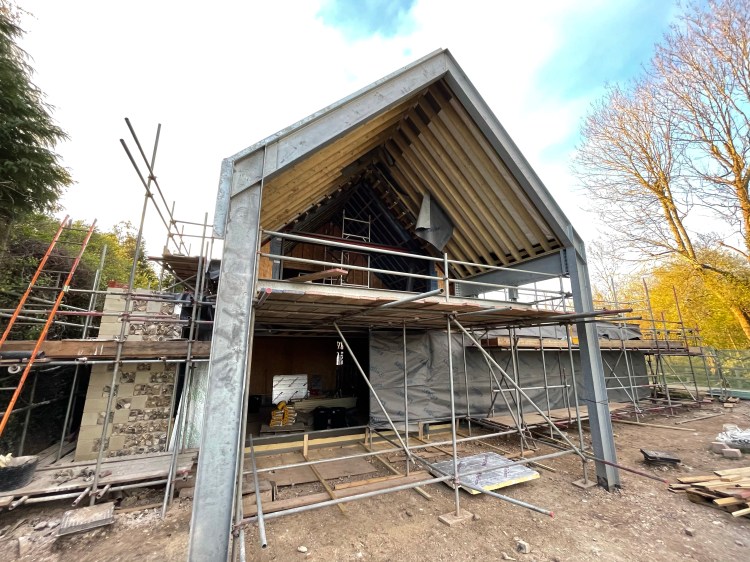
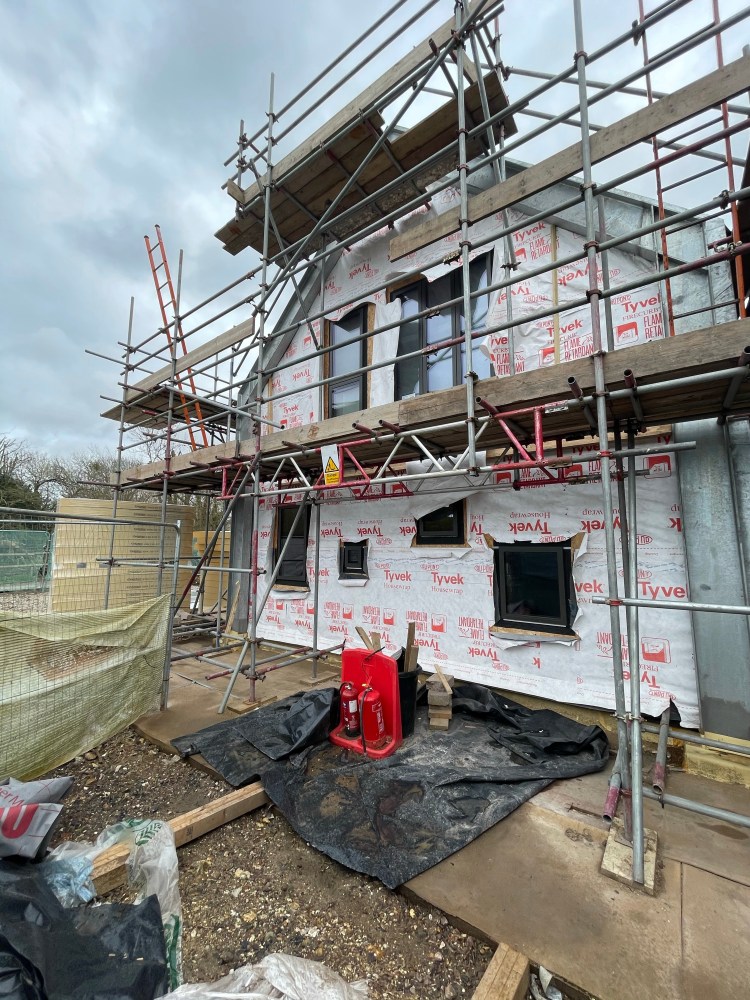
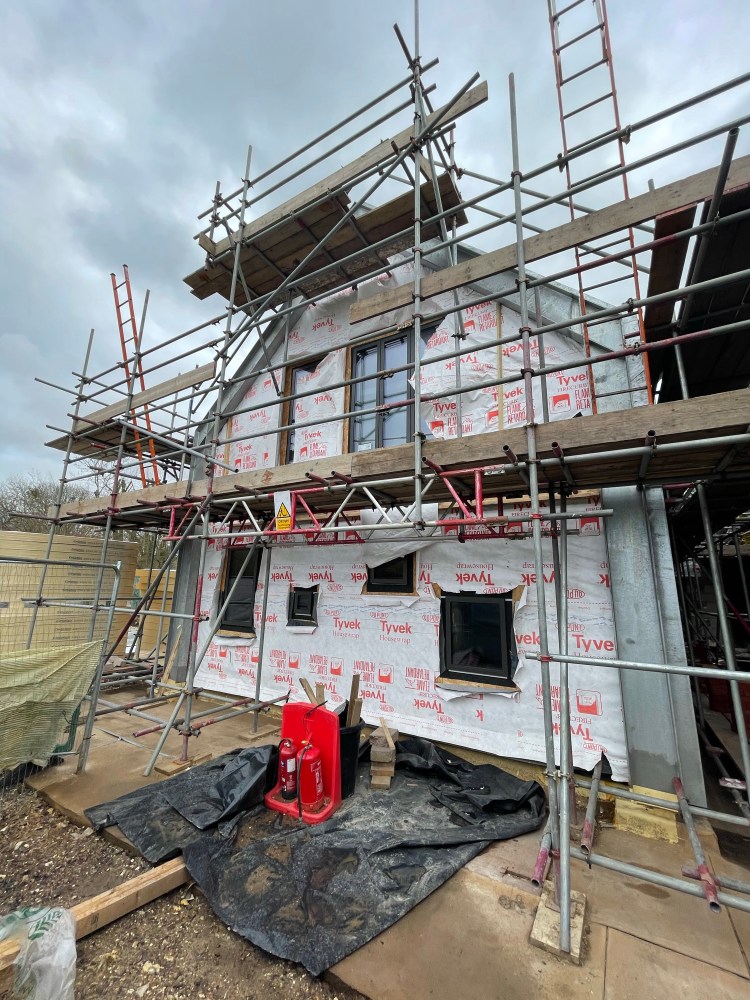
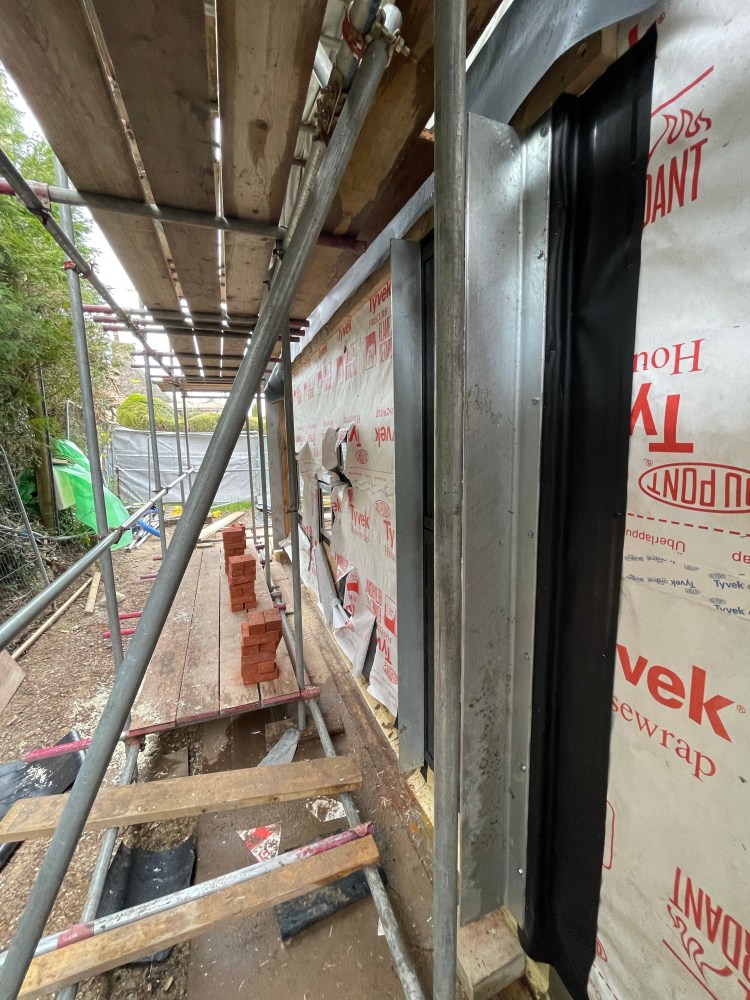
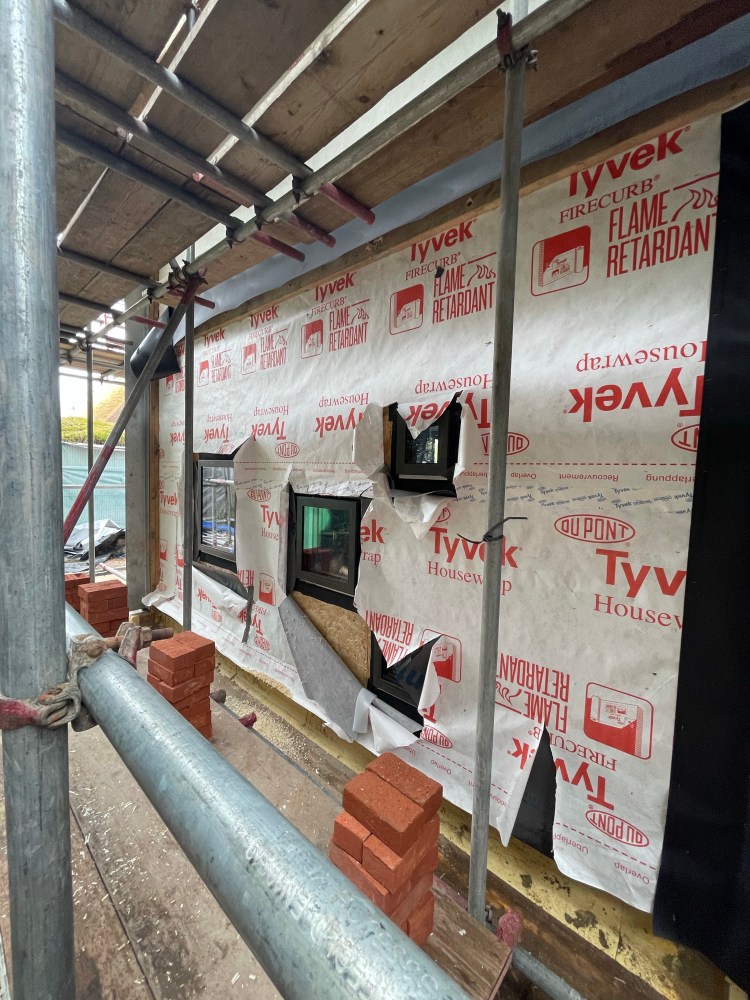
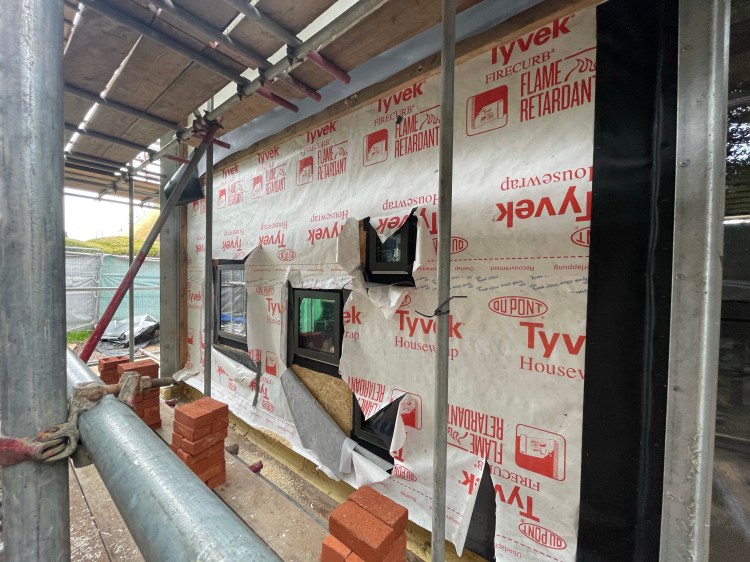
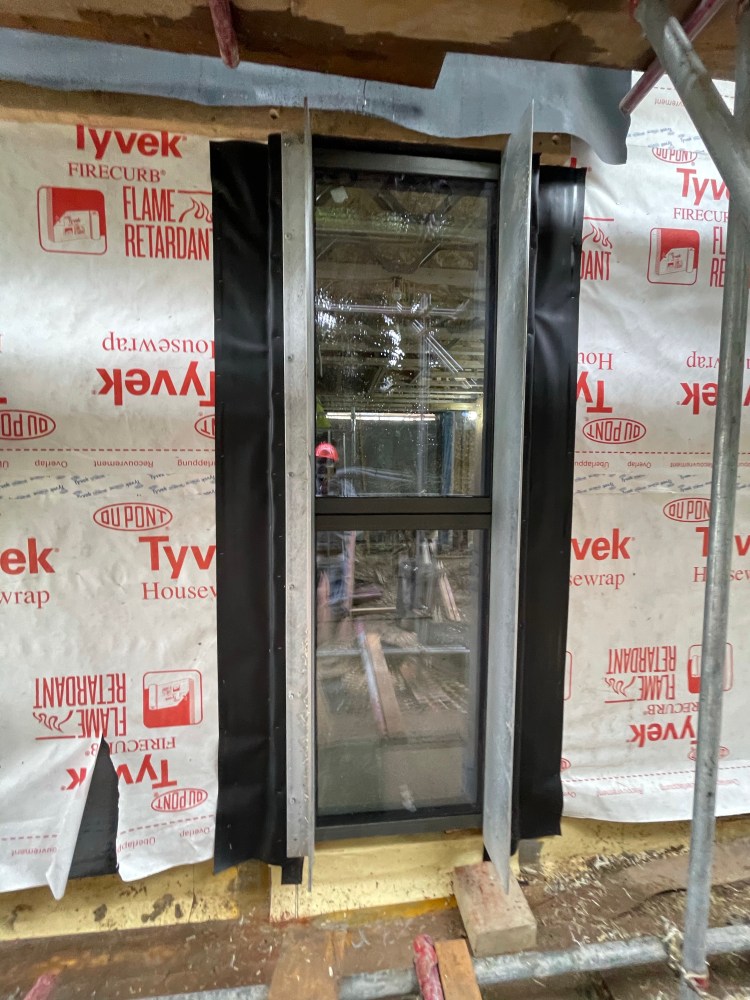
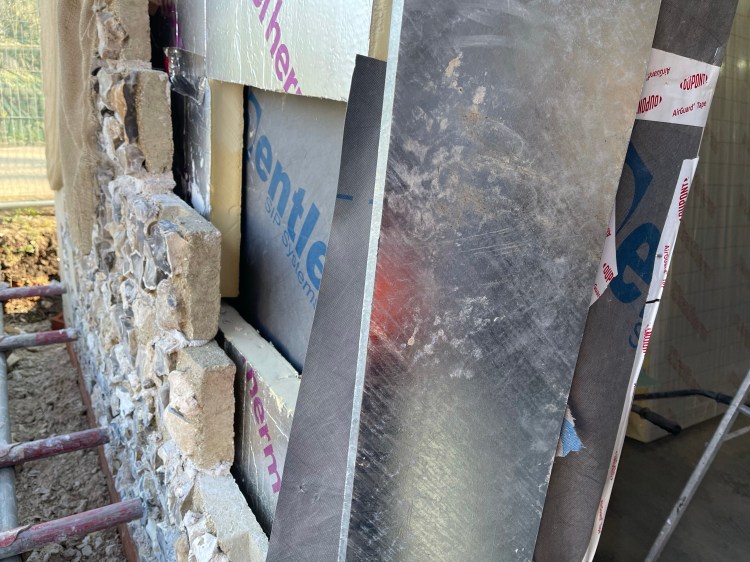
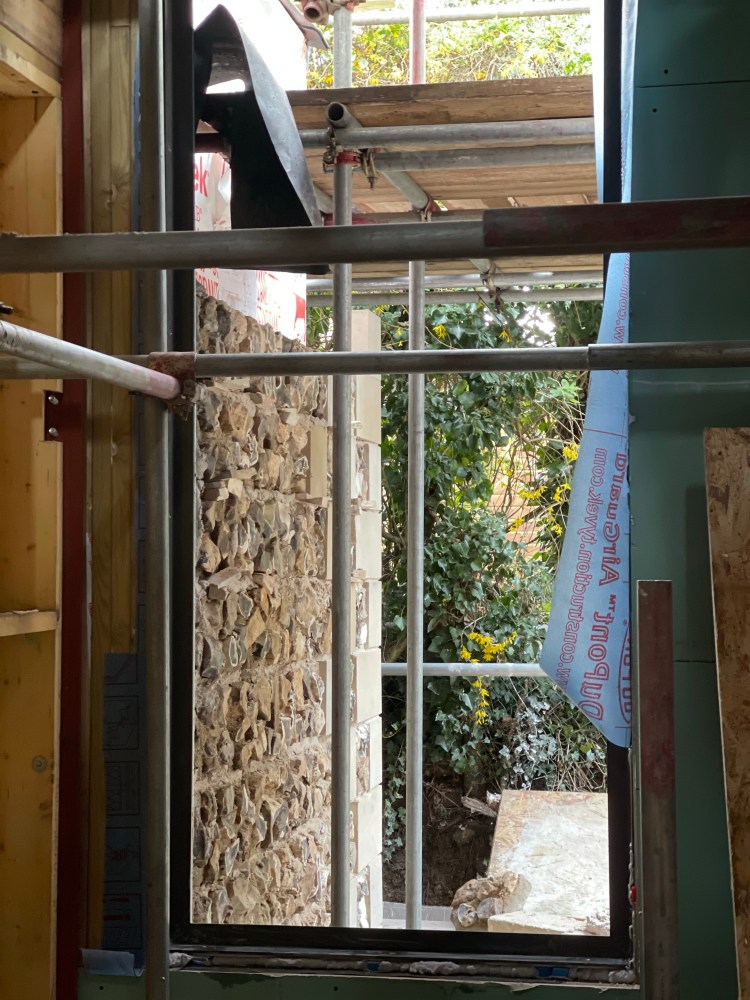
I’ve added a few photos below so you can see where we’re up to with the cladding. You can also see in sections the thickness of the wall when you combine the flint cladding, the SIP, insulation membrane and the stud wall. You will also notice that all the windows on the front of Dianthus have been installed. We’re installing the big sliding doors to the patio and the Juliet Balcony of our master bedroom in the next couple of weeks. The flashings have been installed. However, we do need to be careful not to damage the glass given the patio is currently a high traffic area for the builders.
Once the flint cladding is completed. We will also install the Vastern Timber Oak Cladding as indicated in the plan. It’s absolutely gorgeous. The link above takes you to a case study where the oak we will use has been used for cladding. Incidentally, the Oak is sourced locally from Savernake Forest near Marlborough in Wiltshire.



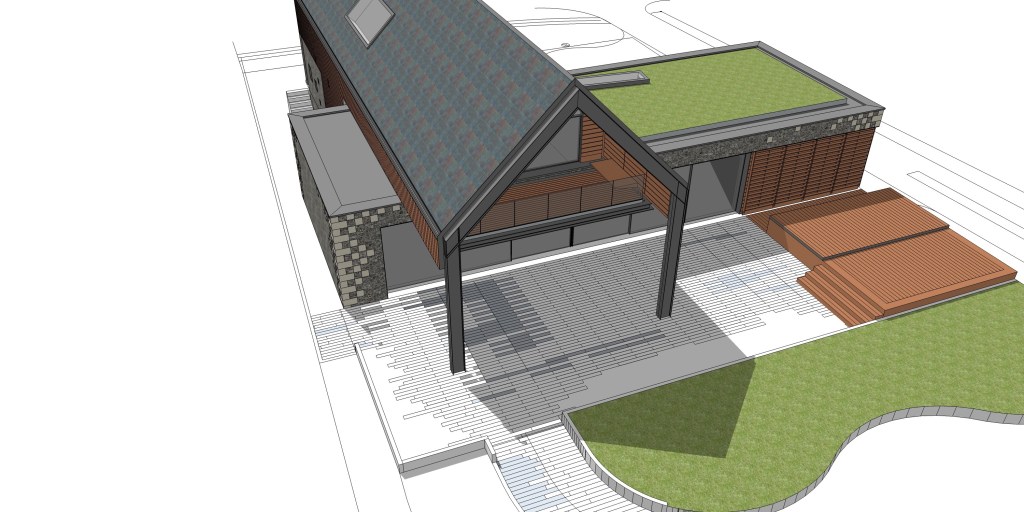
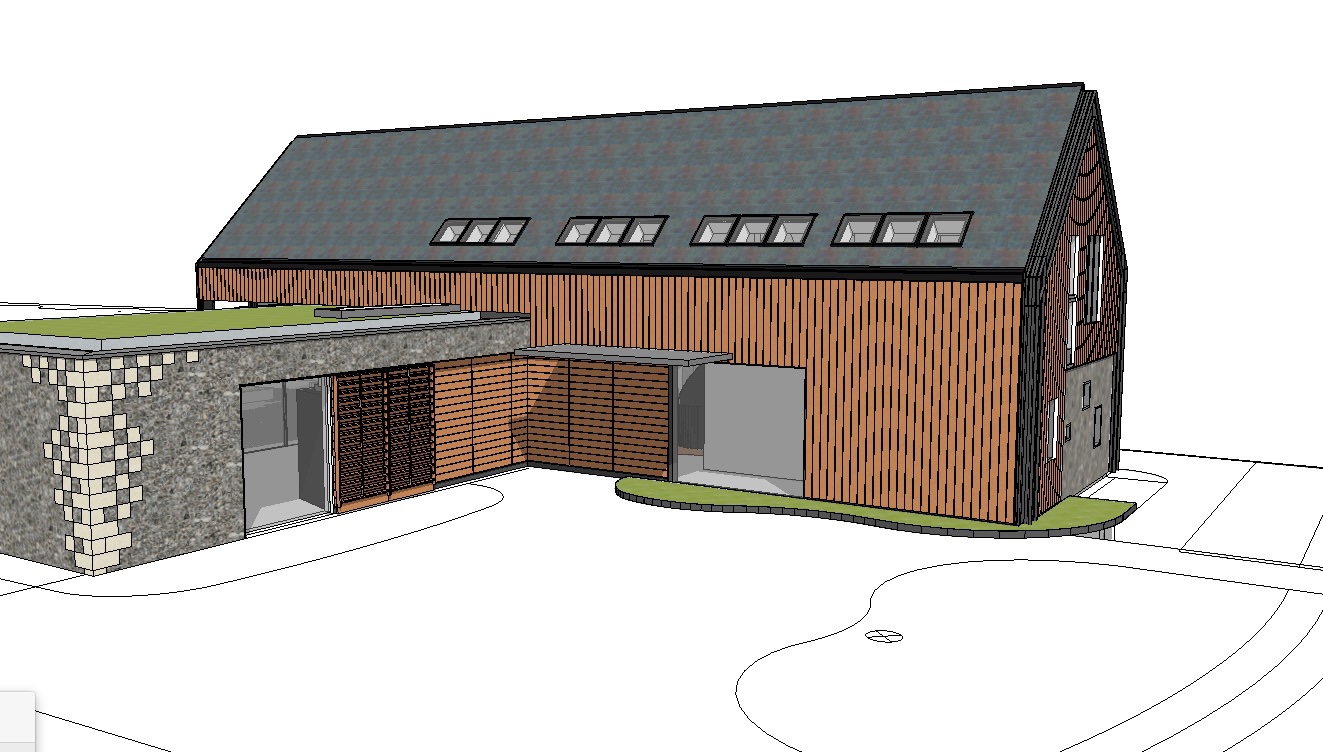
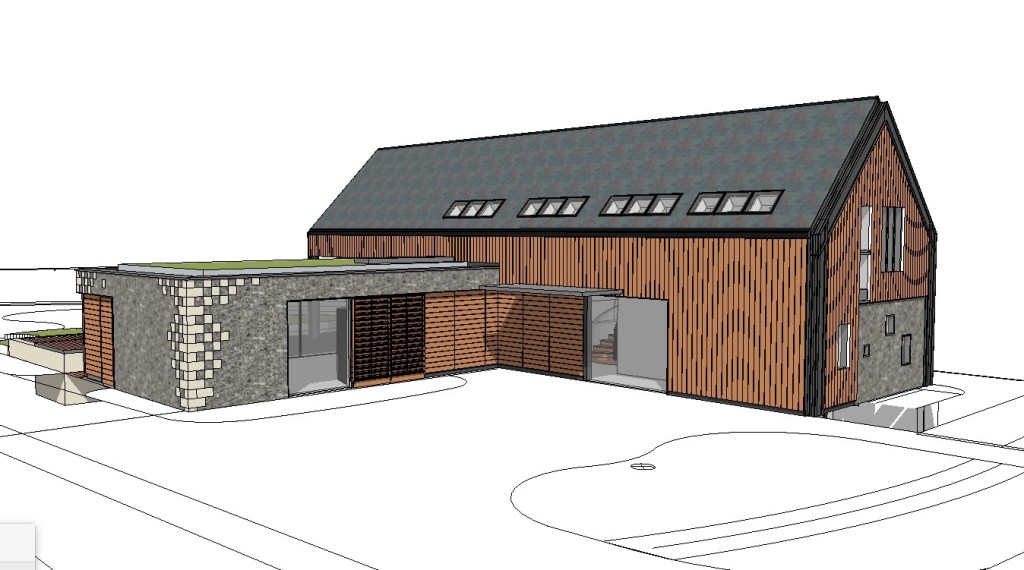
The plans for the flint per elevation are included below.


 Dianthus
2 thoughts on “Cladding Dianthus with Flint and Savernake Forest Oak”